
Last updated November 15, 2026
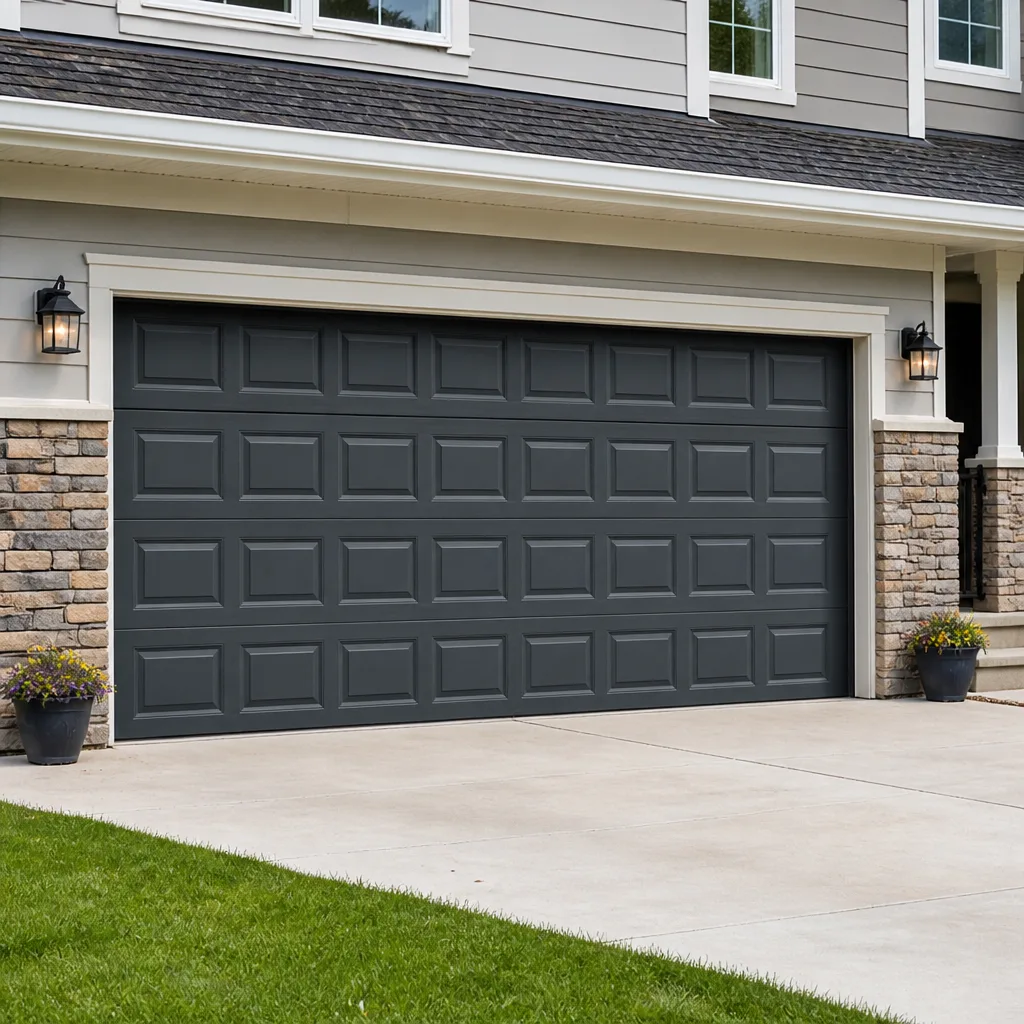 Raised-panel steel
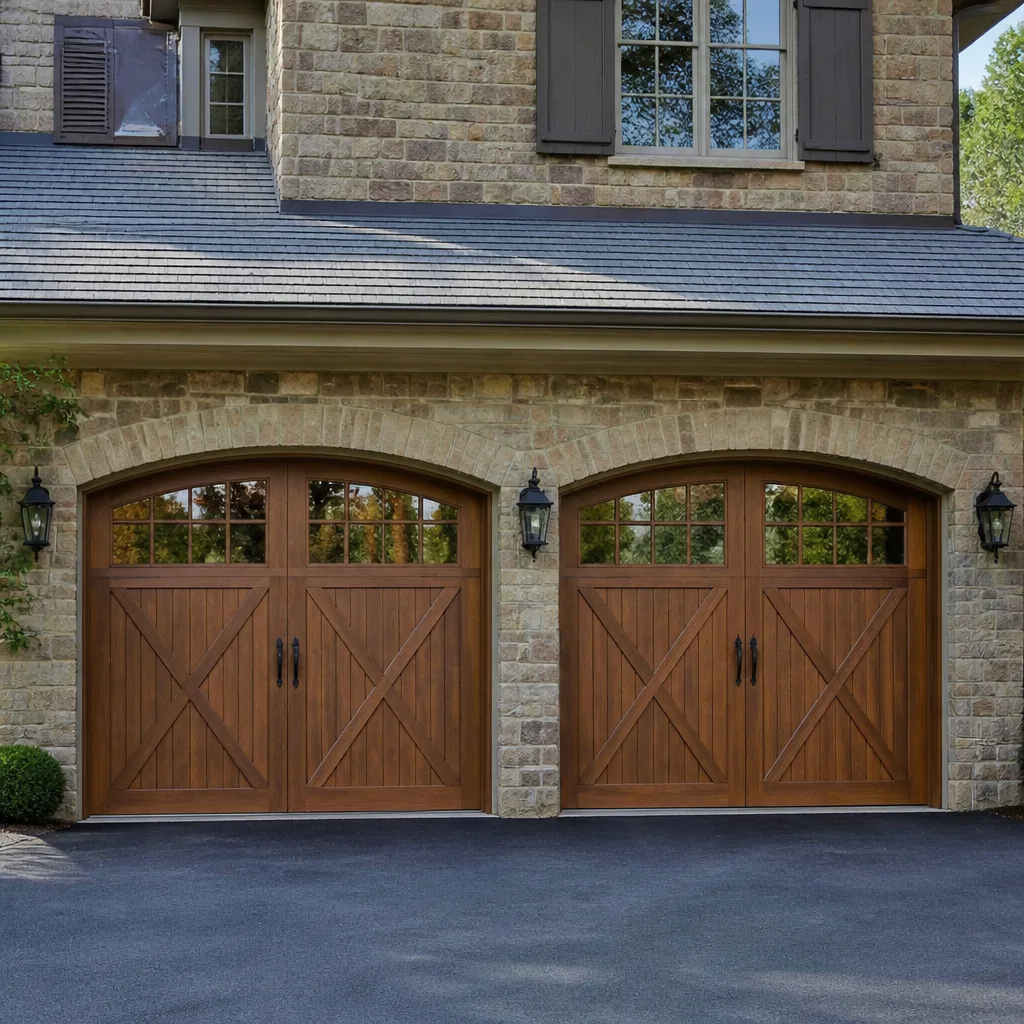 Carriage house
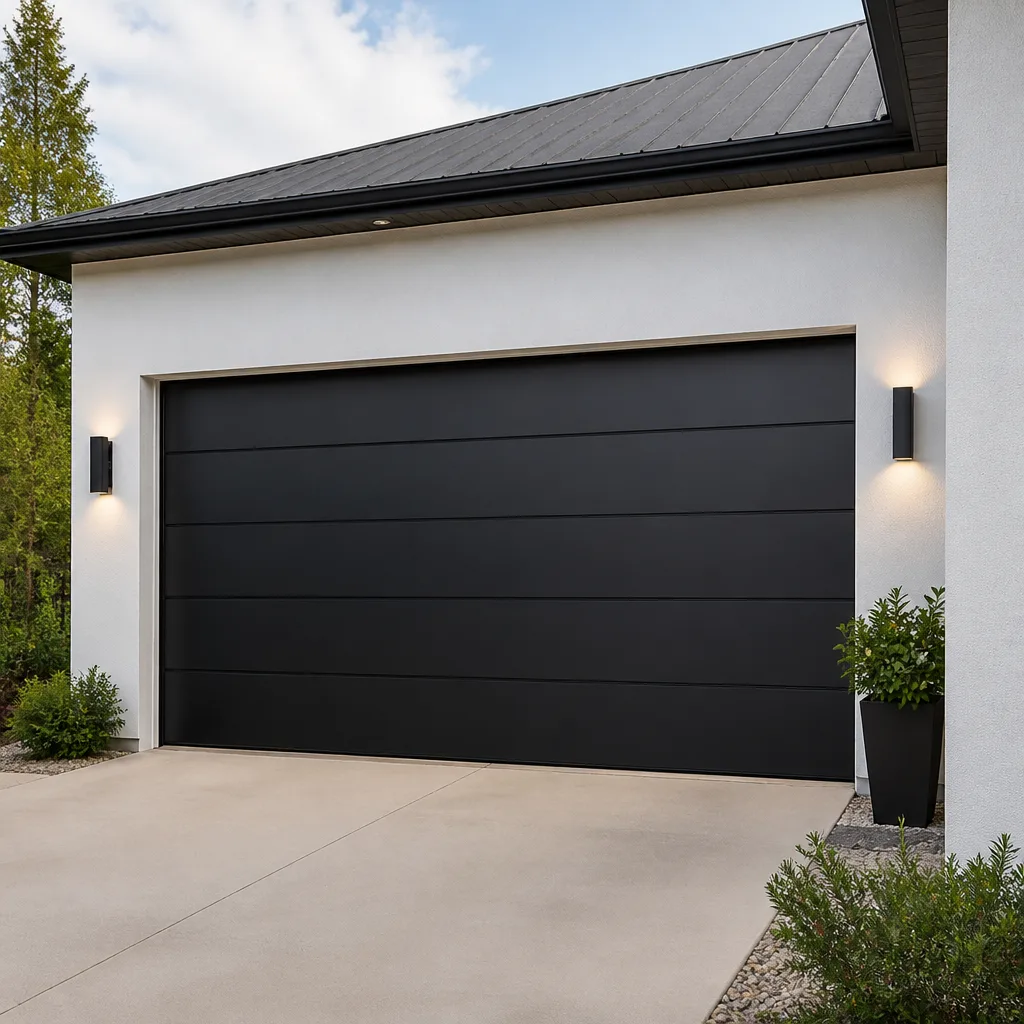 Modern flush
 Full-view glass
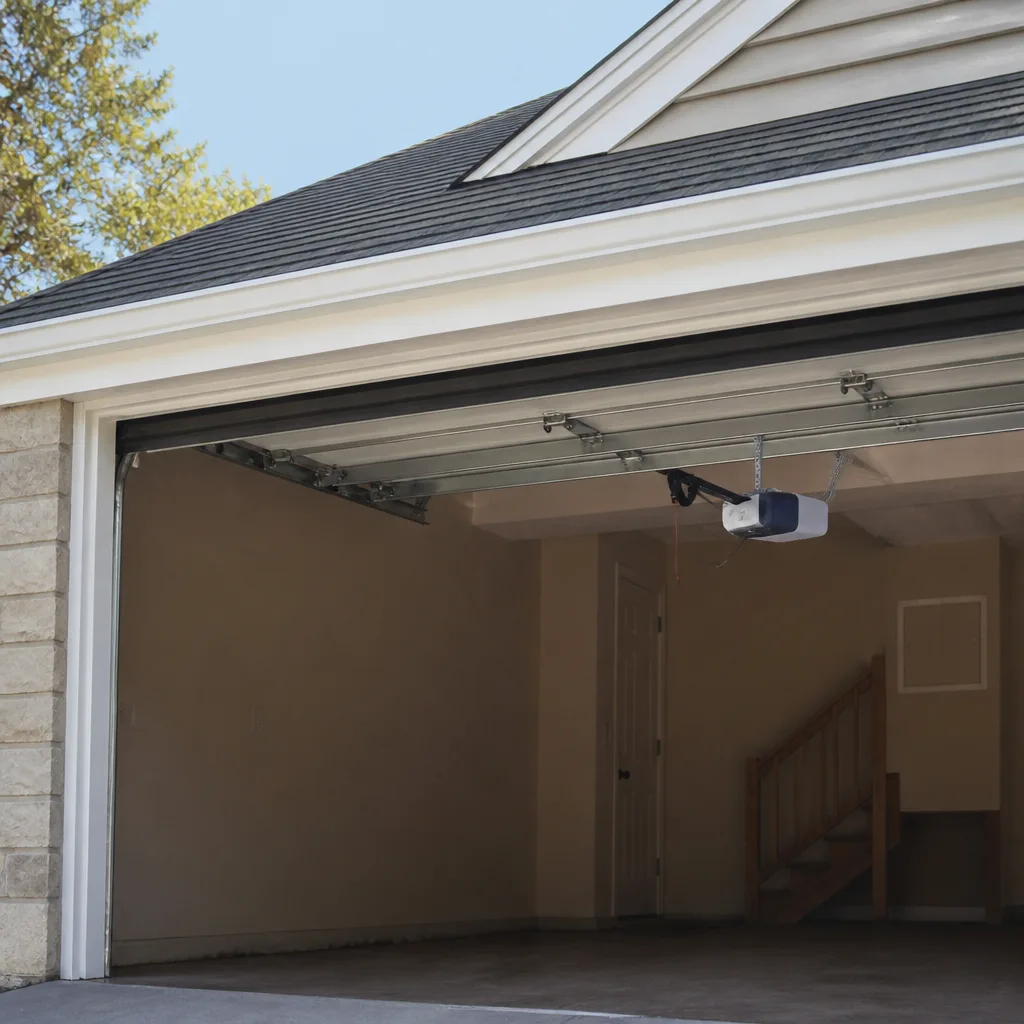 LiftMaster openers
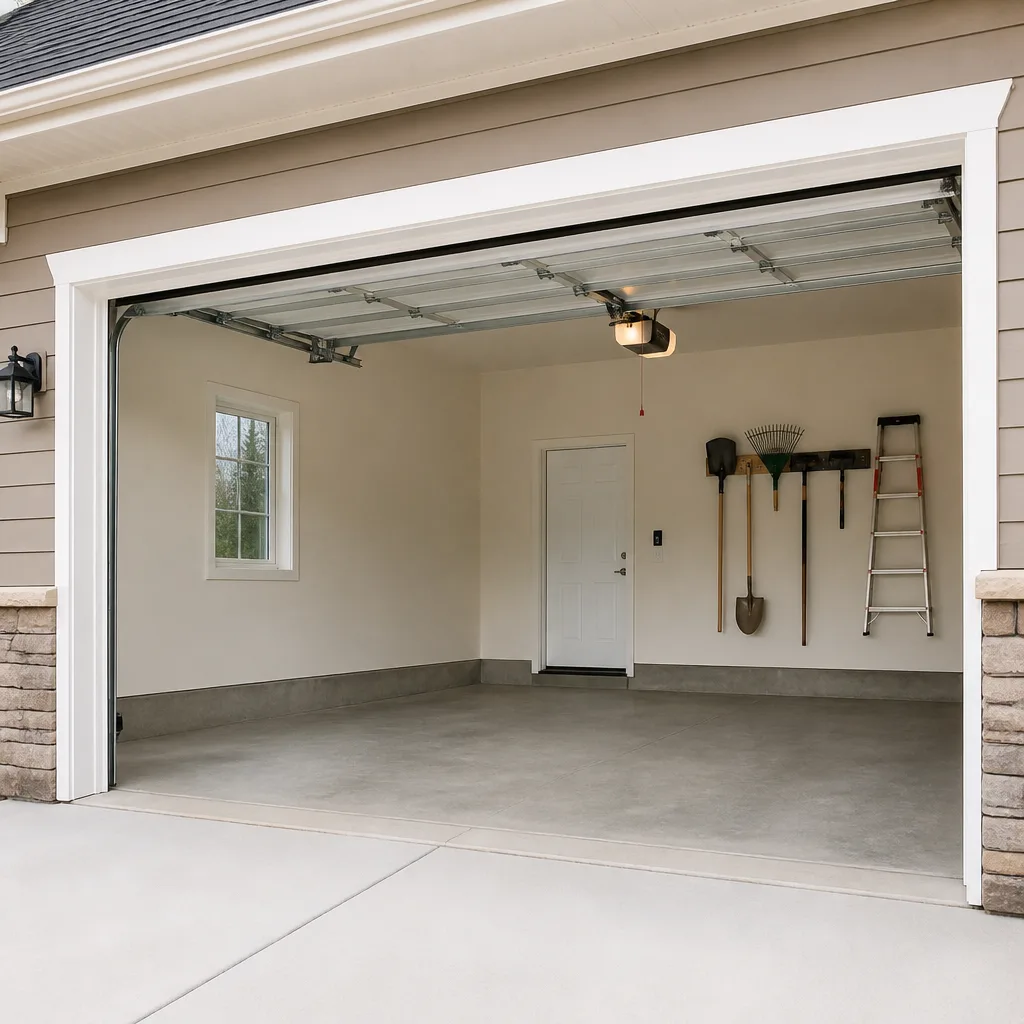 Chamberlain openers
Full 25-point door and opener safety check with every visit - springs, cables, rollers, tracks, and your LiftMaster or Chamberlain opener included
You get a price before we start. It does not change when the pro arrives.
Get your free estimateDIY vs Professional Garage Door: The Knoxville Homeowner’s Decision Guide
Every garage door repair video online shows the same satisfying arc: the problem, the diagnosis, the fix, the door gliding shut. What none of them show is the moment before the work starts – the instant a homeowner weighs what they know against what they don’t and has to make a call. A garage door spring under tension stores enough energy to cause serious injury, and it’s also one of the most-searched DIY garage door repairs online. That gap is worth understanding before you pick up a wrench. This guide breaks garage door work into tasks that genuinely make sense to handle yourself and tasks that don’t, with specific context for Knoxville homes.
Quick Answer
Routine maintenance like lubrication, visual inspection, and tightening loose hardware is safe and worthwhile to do yourself. Springs, cables, and the door’s balancing system are not DIY territory – they carry real injury risk and need a trained technician. Everything else sits on a spectrum: you can often diagnose a cosmetic or minor mechanical issue, but understanding why a door failed usually takes a technician. In Knoxville, older homes with non-standard rough openings make installation one of the clearer cases for hiring a professional.
Styles & brands we work with
- Raised-panel steel
- Carriage house
- Modern flush
- Full-view glass
- LiftMaster openers
- Chamberlain openers
Table of Contents
- Which tasks are genuinely DIY-safe?
- What should you never tackle yourself?
- The hidden cost of a failed DIY attempt
- Why watching it fail isn’t the same as understanding why
- Knoxville-specific considerations
- How DIY maintenance reduces your need for service
- Common mistakes to avoid
- When to call a professional
Which tasks are genuinely DIY-safe?
DIY-safe means the failure mode is inconvenience, not injury. If something goes wrong with a lubrication routine or a dirty photo-eye, the door stays down or stops responding. If something goes wrong with a spring or a cable under tension, the result can be a broken door panel, a damaged opener, or a serious injury. The line between those two categories is clearer than most tutorials suggest.
Tasks we’d say most homeowners can handle without concern:
- Lubricating hinges, rollers, and tracks with a garage-door-specific lubricant. This is the single highest-value habit for extending the life of any door, whether it’s carrying a Clopay panel or a Craftsman opener. A couple of minutes a few times a year is enough.
- Cleaning the photo-eye lenses near the bottom of the tracks. A smudge or cobweb here is the most common reason a door reverses mid-travel.
- Tightening loose bolts on hinges and brackets – provided you’re not loosening anything that holds a spring or cable anchor in place.
- Wiping down and conditioning the door surface, especially on steel panels where grime and pollen build up fast in a Knoxville spring.
- Replacing the batteries and re-pairing remotes for most LiftMaster, Chamberlain, Genie, and Craftsman openers. Re-pairing instructions differ by model, but the process is usually covered in the opener’s manual and doesn’t involve any hazardous components.
- Visually inspecting the door’s balance by disconnecting the opener and lifting the door by hand. If it takes real effort, or won’t stay put halfway up, that’s your cue to call a professional – the springs are out of adjustment and you should not attempt that correction yourself.
If you keep up with the items above, you’ll meaningfully reduce how often you need to call anyone for repair. The door will run quieter, the opener will work less hard, and small issues will surface early enough to address before they become expensive ones.
What should you never tackle yourself?
Some garage door components hold stored energy even when the door is closed and the opener is unplugged. That’s the crucial point most DIY tutorials underplay. A torsion spring at rest is still wound tight, a cable is still under tension, and a door can fall if its counterbalance system is disturbed. We strongly recommend leaving these to a trained technician. The injury risk is real and the tools required are not the ones most people own.
These specific tasks are in the “do not attempt” category:
- Replacing or adjusting torsion or extension springs. This is the most dangerous garage door component by a wide margin. Springs store enough force to break bones or cause worse, and adjusting them incorrectly can send a door slamming down or release stored force unexpectedly. This is not a task to learn from a video.
- Replacing or re-tensioning cables. A cable under load can whip with violent force if it slips free. Routing and drum alignment require specific tools and sequence that most homeowners don’t have.
- Realigning the door’s tracks after impact damage. Bent tracks can temporarily be nudged into apparent alignment, but the geometry of the door’s travel will be wrong and the opener will strain. Track work is best left to a technician who can verify the whole system.
- Replacing a full door panel after a dent or crash. Panel replacement is generally straightforward, but door weight, hinge alignment, and the interaction with the existing springs make weight-matched panel work a professional job on most doors.
- Opening the opener unit to diagnose a circuit board issue. Even unplugged, a modern opener’s electronics and capacitor systems aren’t friendly to handling. Better to let a technician who specializes in openers look at it.
- Installing a new door or opener on a home with a non-standard rough opening. More on this below – Knoxville’s older housing stock makes this a bigger issue than most installation guides assume.
If a spring has broken, a cable has snapped, or a door has come off its track, call garage door repair rather than attempting a fix. A qualified technician arrives with the right tools and knows how to handle the stored energy safely.
The hidden cost of a failed DIY attempt
A DIY repair that goes wrong rarely stays the same size. Partial disassembly of a door under tension tends to turn one problem into several. A homeowner attempting a spring adjustment without the right winding bars might over-wind the new spring or damage the torsion tube, add a bent door panel, or tax the opener enough that it also needs service. The original $200-ish repair becomes a $500 to $700 one once the collateral damage is on the invoice.
We’ve seen a few recurring patterns in the Knoxville area. The first is a door that “just needs a little adjustment” – the homeowner loosens something, the door settles out of balance, and now the opener’s gear and sprocket are strained every time it runs. The second is a respected brand door – say a Wayne Dalton or a Raynor – where non-original hardware was substituted for a broken hinge or roller, throwing off the door’s weight distribution. The third is an attempt to fix a noisy opener by opening the case, which voids any remaining manufacturer coverage on that unit.
The comparison that matters isn’t DIY cost versus professional cost in isolation. It’s the total cost of the DIY path including what might go wrong, set against the fixed, agreed-upon price of a professional visit. Once you run that math honestly, the professional call often comes out ahead even before you count your time. And when you hire a professional, the price is quoted and agreed before any work starts – that’s the answer to the invoice-anxiety part of the decision. You know the number before anyone touches the door.
Why watching it fail isn’t the same as understanding why
Any homeowner can watch a door and see that it stutters, kicks back, or stops halfway. Watching the failure takes a few seconds. Explaining why it failed is where the difference between a DIY diagnosis and a professional one shows up. A door that reverses mid-travel could be a misaligned photo-eye, a failing opener logic board, a weakened spring that isn’t lifting evenly, or a track obstruction. Those four possibilities have four different fixes and four different price ranges.
This is where multi-brand familiarity earns its keep. A technician who works regularly with garage door opener repair on LiftMaster, Chamberlain, Genie, and Craftsman units can often tell from the opener’s behavior, sounds, and error codes which subsystem is involved – before any disassembly. The same applies on the door side: knowing how a Clopay panel should feel on its hinges in mid-travel versus how it feels when a spring is a few pounds off takes experience. Our technicians have up to 11 years of experience, and the patterns they recognize are exactly the ones a video can’t convey.
What a professional also catches are the things a homeowner wouldn’t know to look for because nothing appears wrong from the driveway. Rollers that have flat-spotted. A hinge bracket that’s loosened and will fail in a few months. A spring’s wear pattern that suggests it’s near the end of its life. Catching those before they become the reason for a call at an inconvenient moment is the quiet value of a professional service visit – it doesn’t show up on the invoice but it changes what you’re going to spend over the next few years.
Knoxville-specific considerations
Housing stock matters. A meaningful share of homes in Knoxville and the neighborhoods around it – think Fountain City, Bearden, and the older pockets of South Knoxville – were built decades ago, and the rough openings in those garages are often not the standard dimension modern doors are manufactured to. That’s fine when a door is being repaired in place. It becomes a real problem when a homeowner tries to install a new door or opener assuming the opening is standard.
Non-standard openings typically mean one of three things:
- The door sizing has to be custom or trimmed to fit, which changes the installation planning significantly.
- The header or framing needs adjustment before the door will operate correctly, which is a carpentry task, not a garage door task.
- The existing opener’s rail can’t be reused with the new door’s dimensions, so opener replacement may be part of the project.
We’ve also seen plenty of Knoxville homes where a previous owner installed a door without addressing the framing – it works for a while, then the door starts binding because the opening was never square to begin with. Diagnosis of that kind of chronic binding is a professional call; it typically doesn’t show up as a clean single-fix problem.
On the repair side, Knoxville’s hot, humid summers take a toll on door hardware. Rollers wear faster, lubricants break down sooner, and the wood components that frame some older garage openings tend to swell. If your door is noisier in July than it is in January, that’s not your imagination – it’s the humidity. It’s also a good reason to keep your DIY lubrication routine on a seasonal schedule rather than an annual one.
For installation work on a Knoxville home, scheduling matters. Installation is a measured, planned, ordered job – it isn’t a same-day call. The right way to approach it is to have a professional measure the opening first, then quote the door and labor together. Any reputable company will do that free of charge.
How DIY maintenance reduces your need for service
The best DIY work on a garage door is the kind that prevents a professional call in the first place. You don’t need to touch springs or cables to meaningfully extend your door’s life. A simple maintenance rhythm handled entirely by the homeowner covers more of the wear-and-tear problem than people assume.
A reasonable seasonal routine for a Knoxville homeowner:
- Lubricate hinges, rollers, and torsion-tube bearings with a garage-door-specific lubricant. Avoid WD-40 as a substitute; it doesn’t hold up under repeated cycles the way a proper lubricant does.
- Wipe the tracks clean with a damp rag. Don’t apply lubricant to the tracks themselves – they’re meant to be clean and dry, and lubricating them attracts grit that accelerates roller wear.
- Check the photo-eye alignment by blocking the beam with your hand while the door closes. If it doesn’t reverse, the sensors are misaligned or dirty.
- Tug on the door’s manual-release cord to make sure the disconnect mechanism still works freely. This is what you’d rely on in a power outage.
- Listen to the door every time it runs. New clunks, grinding, or rattles are cheaper to diagnose in week one than in month six.
- Test the balance by disconnecting the opener and lifting the door by hand to about waist height. A balanced door stays put; one that drifts down or up needs professional attention on its springs.
Handled consistently, this routine noticeably reduces how often the Easton Garage Door Service team gets called out for the routine stuff. It also makes a professional service visit more efficient – if a door’s been well-maintained, the technician can focus on the specific problem rather than the accumulated wear.
Common Mistakes to Avoid
- Treating a spring replacement like a roller replacement. They belong in different universes of risk. A spring is stored energy; a roller is a wheel. Don’t let the same YouTube video style convince you they’re comparable tasks.
- Using the wrong lubricant on the tracks. Tracks should be dry and clean; hinges and rollers are what get lubricated. White lithium grease or a garage-door-specific spray belong in the right places, not sprayed everywhere.
- Assuming a Knoxville home has a standard rough opening. Older homes in Fountain City, Bearden, and similar neighborhoods often don’t. Measure before you order, or have someone measure for you.
- Ignoring a repeated reverse or bounce. If the door reverses mid-travel, the photo-eye is the most likely cause, but a failing opener logic board produces the same symptom. Don’t assume you know which and fix only the wrong one.
- Mixing hardware brands on a Wayne Dalton or Raynor door. Weight-matched hardware matters; substituting generic hinges and rollers on a brand-specific door throws off balance and accelerates wear.
- Opening the opener case to “see what’s wrong.” This often voids whatever manufacturer coverage remains on that unit, and the electronics inside aren’t designed for field handling. If an opener misbehaves, let a technician look at it.
- Assuming a broken spring means a full door replacement. Most of the time it doesn’t. A quality repair extends the door’s life by years, especially if the panels themselves are in good shape.
- Bypassing a free estimate to save a step. There’s no reason to skip a free, no-obligation written quote. It’s the number you’re going to make the decision with either way – best to have it in writing.
When to Call a Professional
Call a professional when the problem involves springs, cables, track realignment after impact, or anything you can’t diagnose with certainty. Call when the door is off its tracks, when a spring has visibly snapped, when the door won’t stay balanced in mid-travel after you’ve disconnected the opener, or when the opener behaves erratically in a way that suggests a logic board issue. Call when you’re planning an installation, because this needs a measured, ordered, scheduled job – not a same-day improvisation. Call whenever the decision involves lifting, holding, or adjusting a component under tension. That rule covers 90 percent of the genuinely dangerous scenarios on a garage door.
Easton Garage Door Service offers free estimates in Knoxville. Call (855) 965-2742. We answer 24/7. Fast dispatch from 7am to 7pm, Sunday through Friday. Our technicians are trained across LiftMaster, Chamberlain, Genie, Clopay, Amarr, Wayne Dalton, Craftsman, and Raynor – so we work on the brand you already have and give you an honest read on whether repair makes sense or replacement does. The price is quoted and agreed before any work starts.
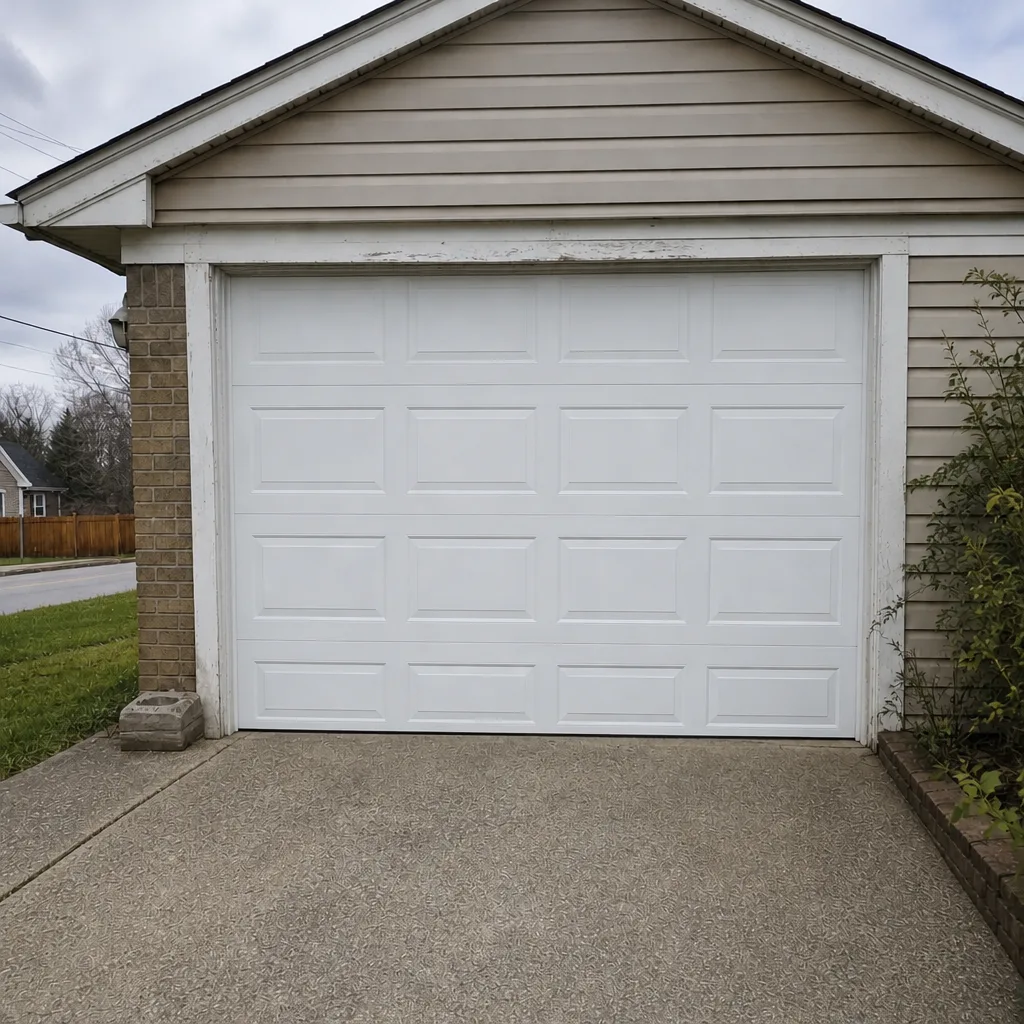
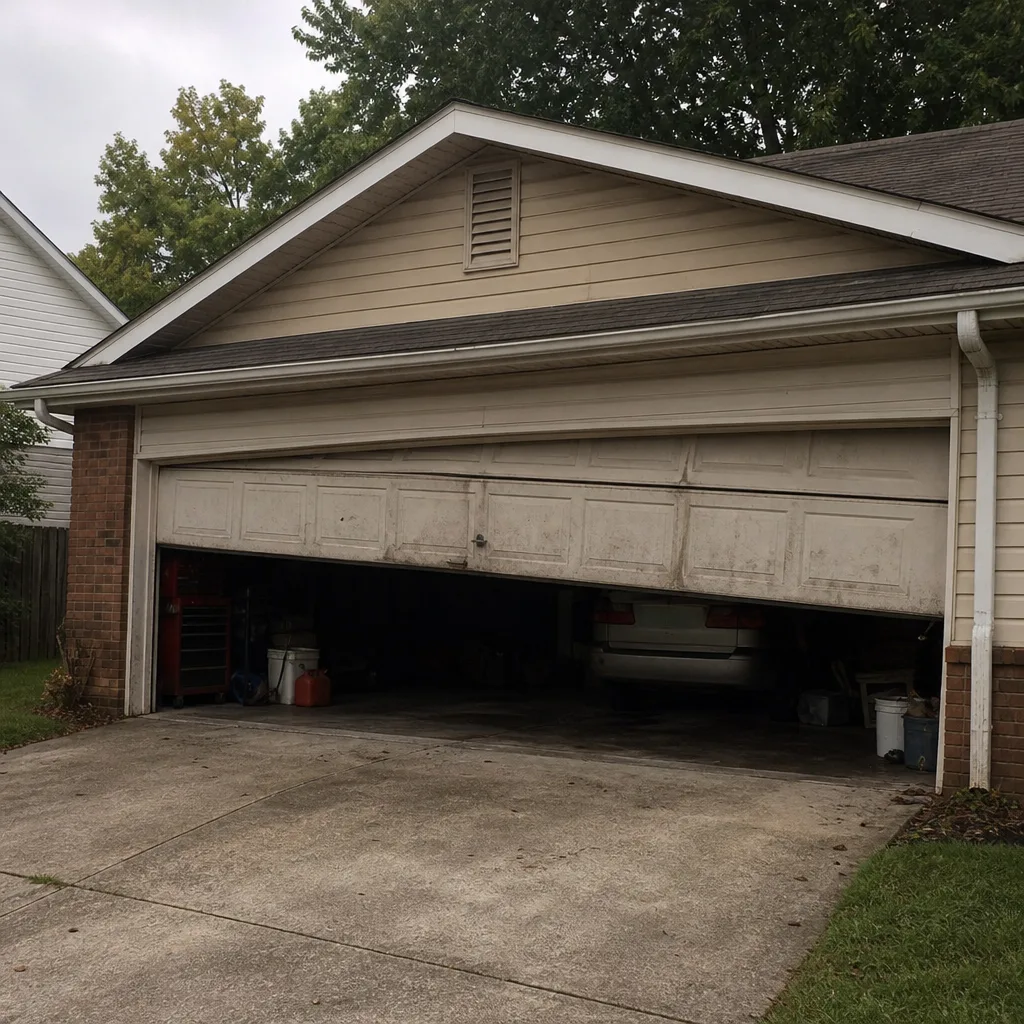
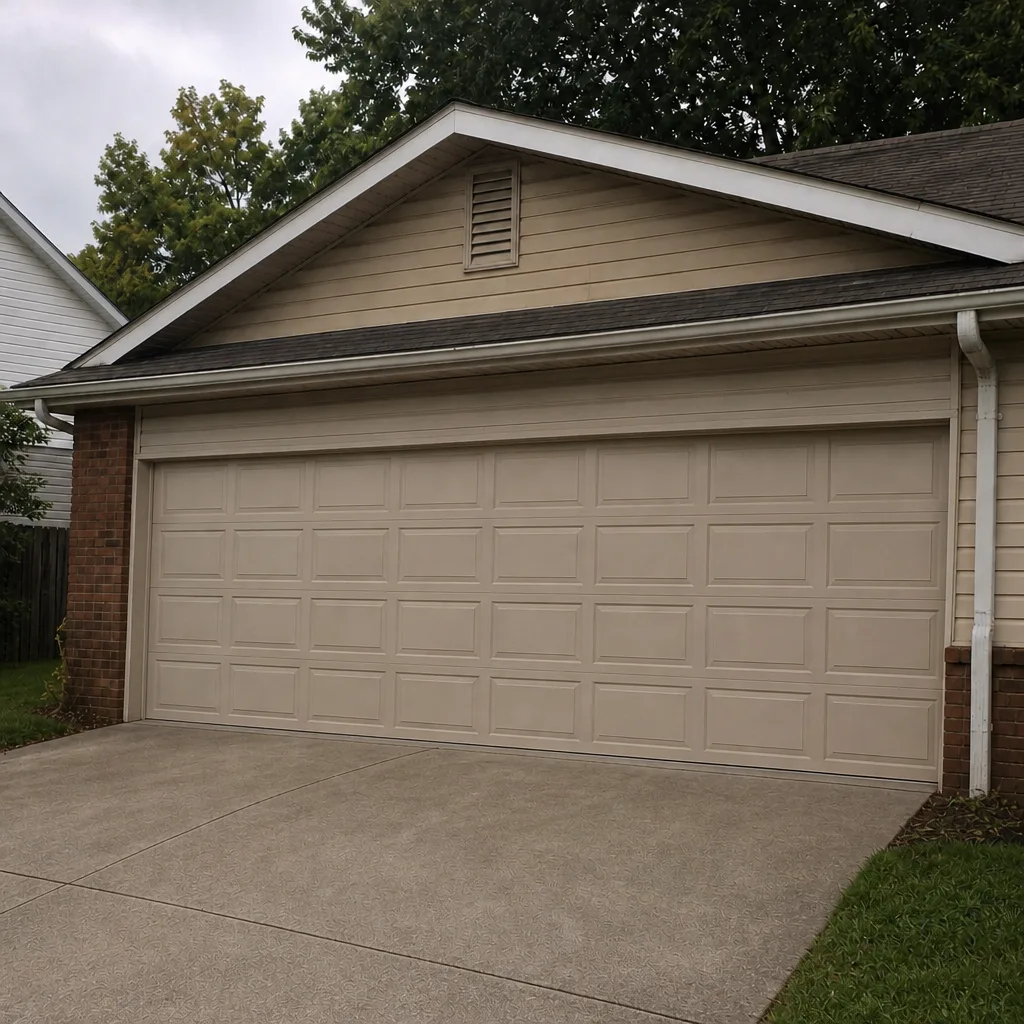
See the difference
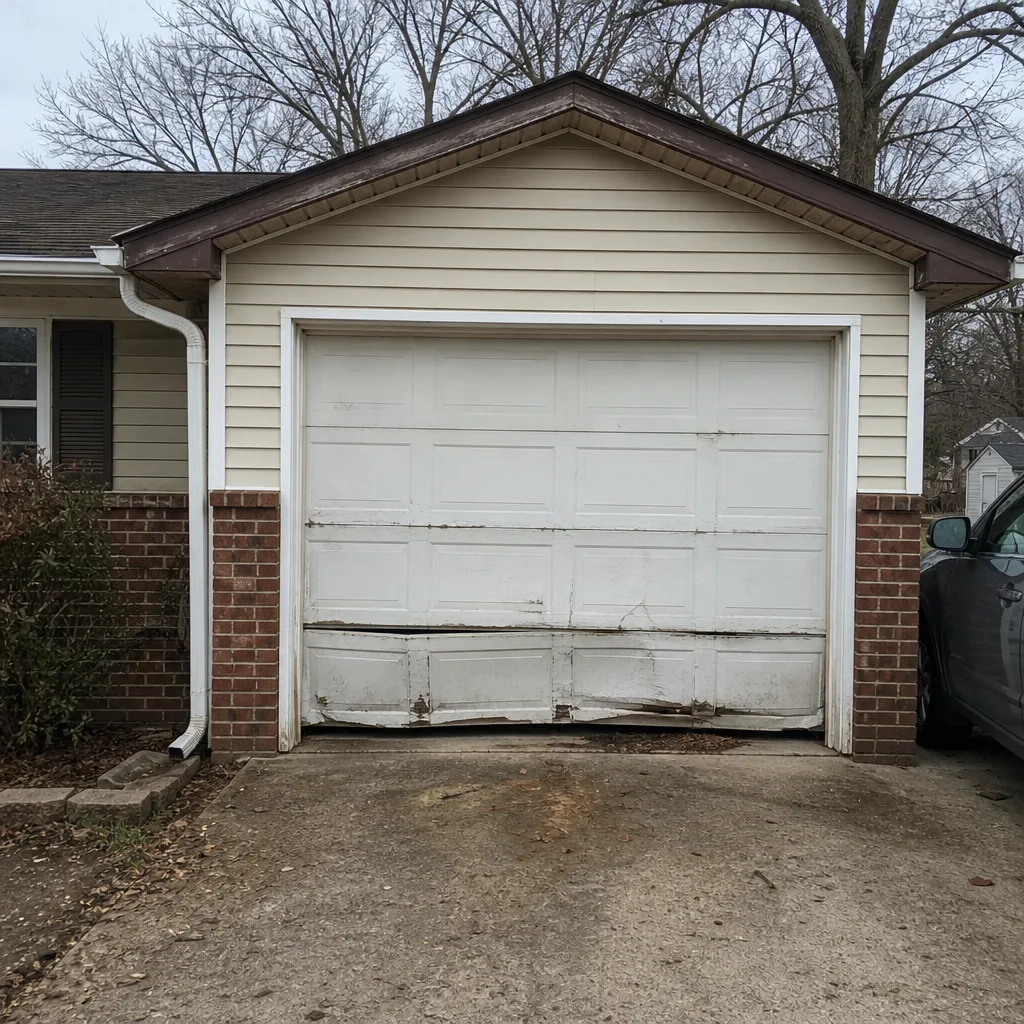 Before
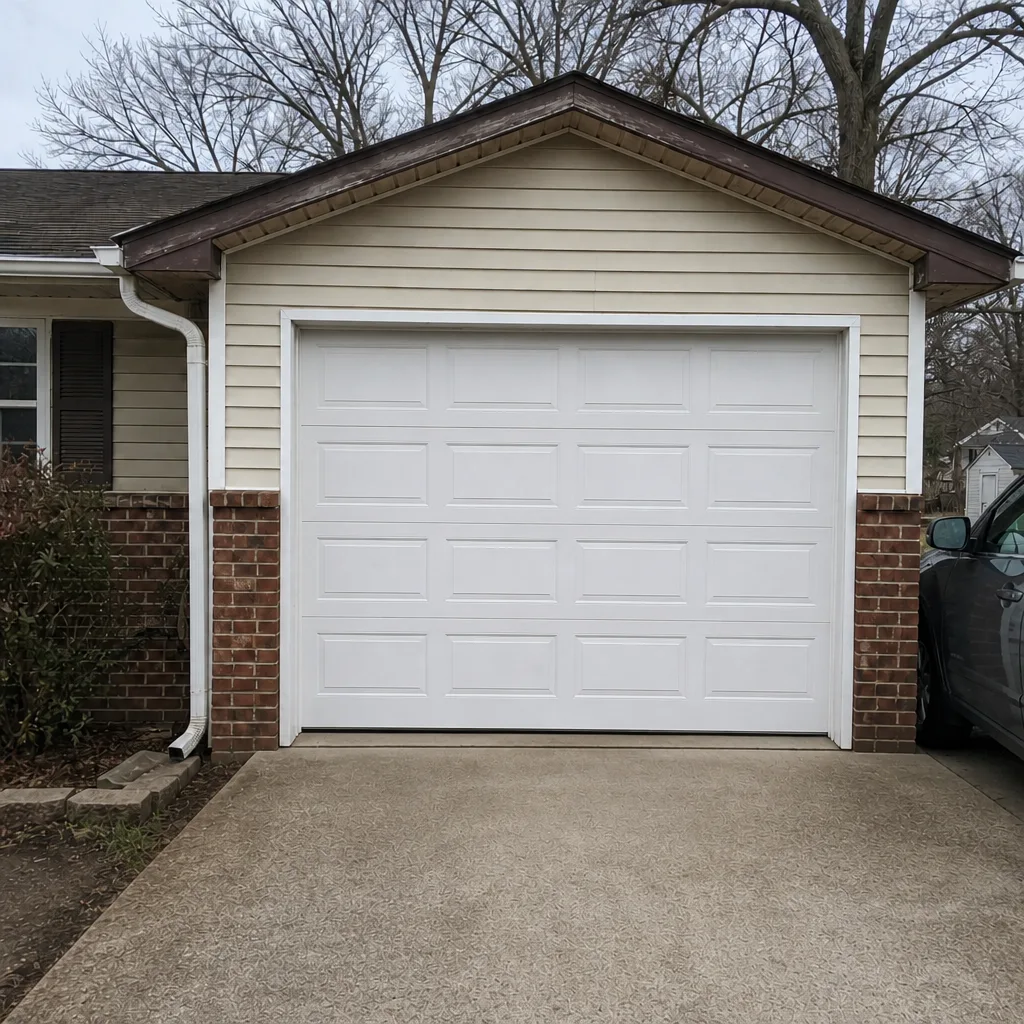 After
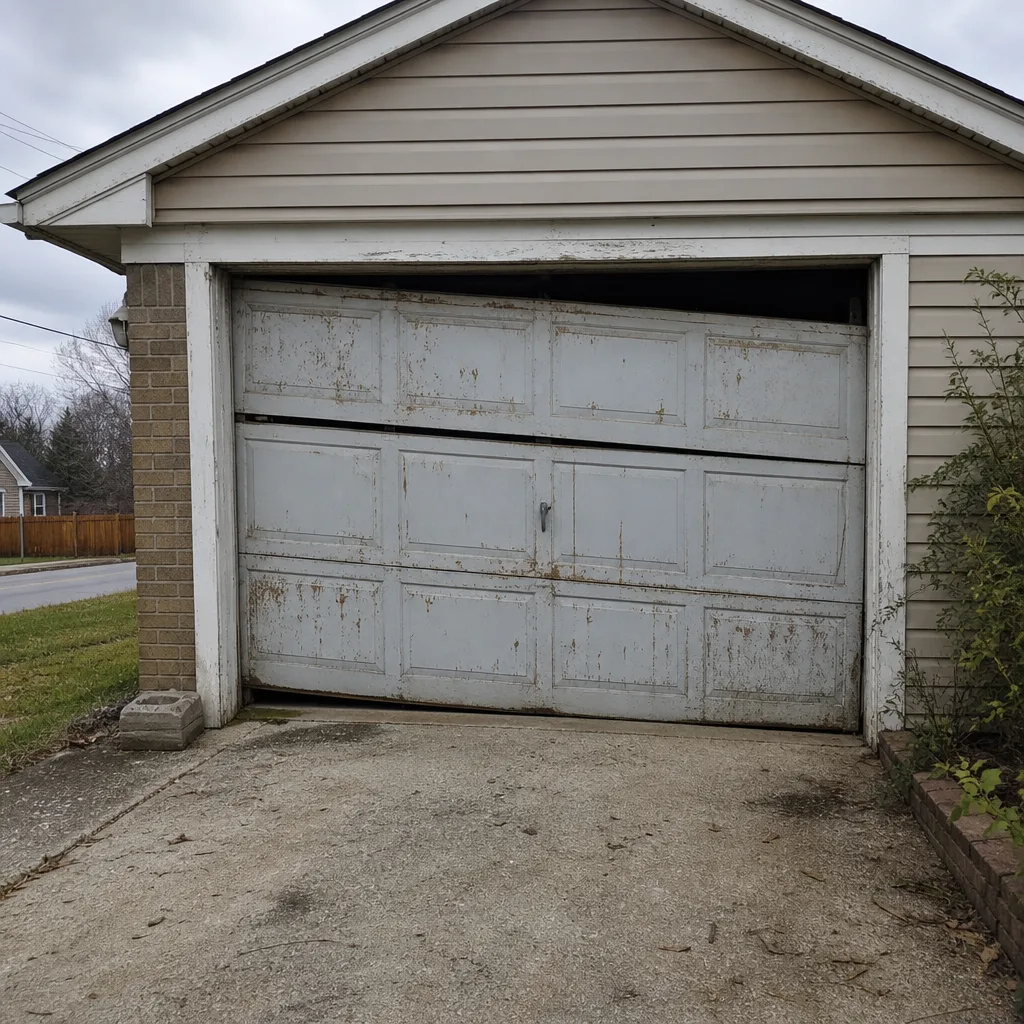 Before
 After
 Before
 After
Frequently Asked Questions
No. Replacing or adjusting a torsion or extension spring is one of the few genuinely dangerous DIY tasks on a garage door, because the spring stores enough energy to cause serious injury even when the door appears to be at rest. The required tools (winding bars, proper tension gauges) aren’t standard homeowner equipment. Call a professional for anything involving springs, and don’t attempt the repair based on a video alone. Call (855) 965-2742 for an exact quote on a spring repair – estimates are free.
Spring and opener failures are the two most common categories, largely because they’re the components with the most wear and the most moving parts. Spring life is measured in door cycles, so a busy household hits end-of-life sooner than a quiet one. Opener issues surface as code errors, remote failures, and erratic travel. Both are typically handled in a single visit. Call (855) 965-2742 for an exact quote – estimates are free.
Only if the scope of work turns out to be different from what was agreed – for example, if a track issue emerges that wasn’t visible before. Otherwise, the number quoted is the number you’ll see on the invoice. On repair calls, the technician inspects the door, explains the problem, quotes the repair, and waits for your approval before starting. Nothing runs up a bill without your sign-off. Call (855) 965-2742 for an exact quote – estimates are free.
We connect Knoxville homeowners with independent local professionals who are licensed and insured for the work they perform. We can share the relevant credentials for the specific technician coming out when you book the appointment. If a credential matters for your insurance or HOA, ask at the time of booking and we can confirm it before the visit. Call (855) 965-2742 for an exact quote – estimates are free.
Often, yes. Repairs are dispatched from 7am to 7pm, Sunday through Friday, and a door stuck open is one of the higher-priority calls. We’re closed Saturday. If a door fails outside the dispatch window, call anyway – we answer 24/7 and will book you into the next available opening. When you call, let us know the door’s condition (stuck open, stuck closed, off its tracks) so we can prioritize correctly. Call (855) 965-2742 for an exact quote – estimates are free.
In almost every case, yes. Non-standard openings are common in older Knoxville neighborhoods, and the right approach is to have a professional measure the opening before anything is ordered. That measure determines whether the door needs custom sizing, whether the framing needs adjustment, and whether the existing opener can be reused. It’s a planning problem, not a blocker. Installation is scheduled, not same-day, so the first step is a free measure and a written quote. Call (855) 965-2742 for an exact quote – estimates are free.
The Bottom Line
The DIY-versus-professional question for a garage door isn’t really about skill. It’s about which tasks have failure modes you can live with and which ones don’t. Lubrication, cleaning, photo-eye adjustment, and remote-pairing are yours to handle – they extend the door’s life and reduce how often you need anyone’s help. Springs, cables, track realignment, and anything involving stored energy belong to a technician, because the math on injury or a cascading repair breaks the DIY savings case immediately. In Knoxville, older homes with non-standard openings make installation a clearer hire-the-professional call than most guides admit. And a free written estimate means you’re making the decision with real numbers, not guesses. If you’re on the fence about a repair, call (855) 965-2742. We answer 24/7. Fast dispatch from 7am to 7pm, Sunday through Friday.
For more on your local options, see our Knoxville service area page.
Written by the team at Easton Garage Door Service.