
Last updated November 15, 2026
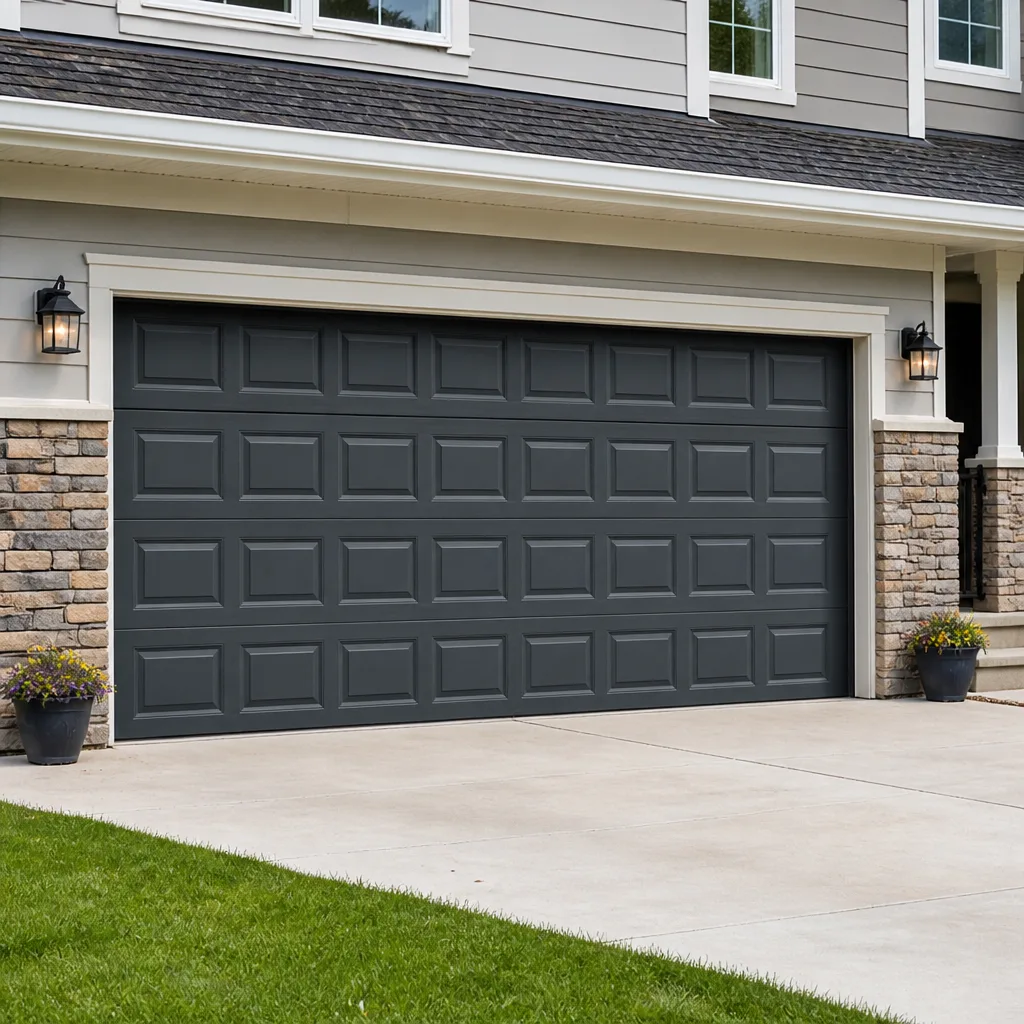 Raised-panel steel
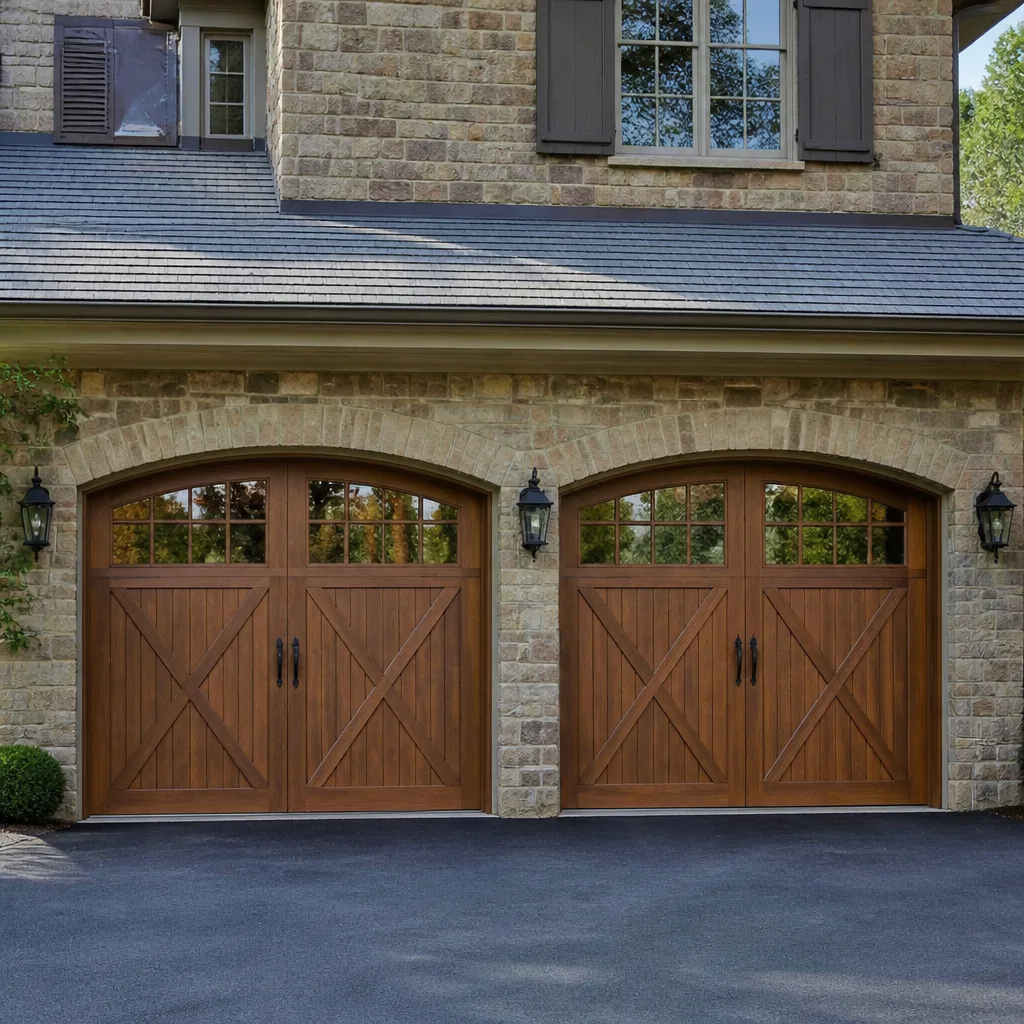 Carriage house
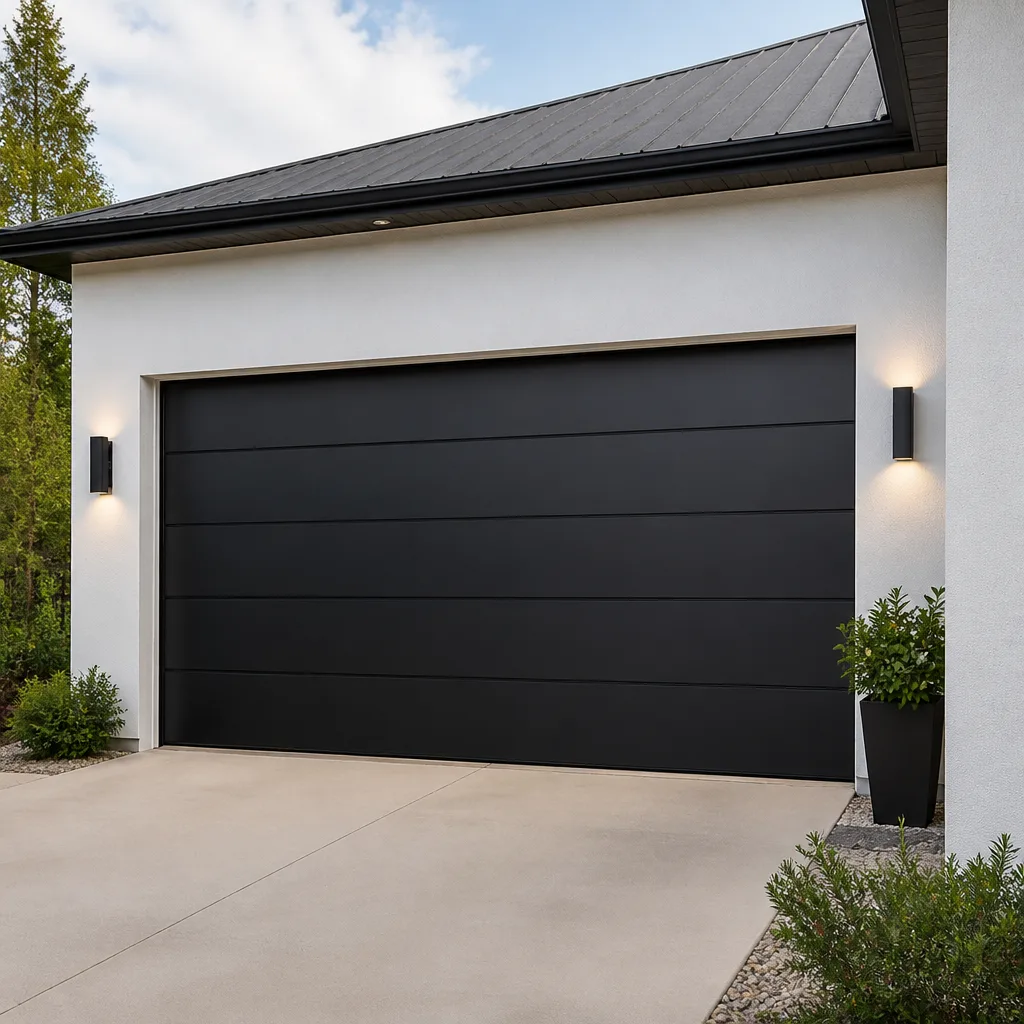 Modern flush
 Full-view glass
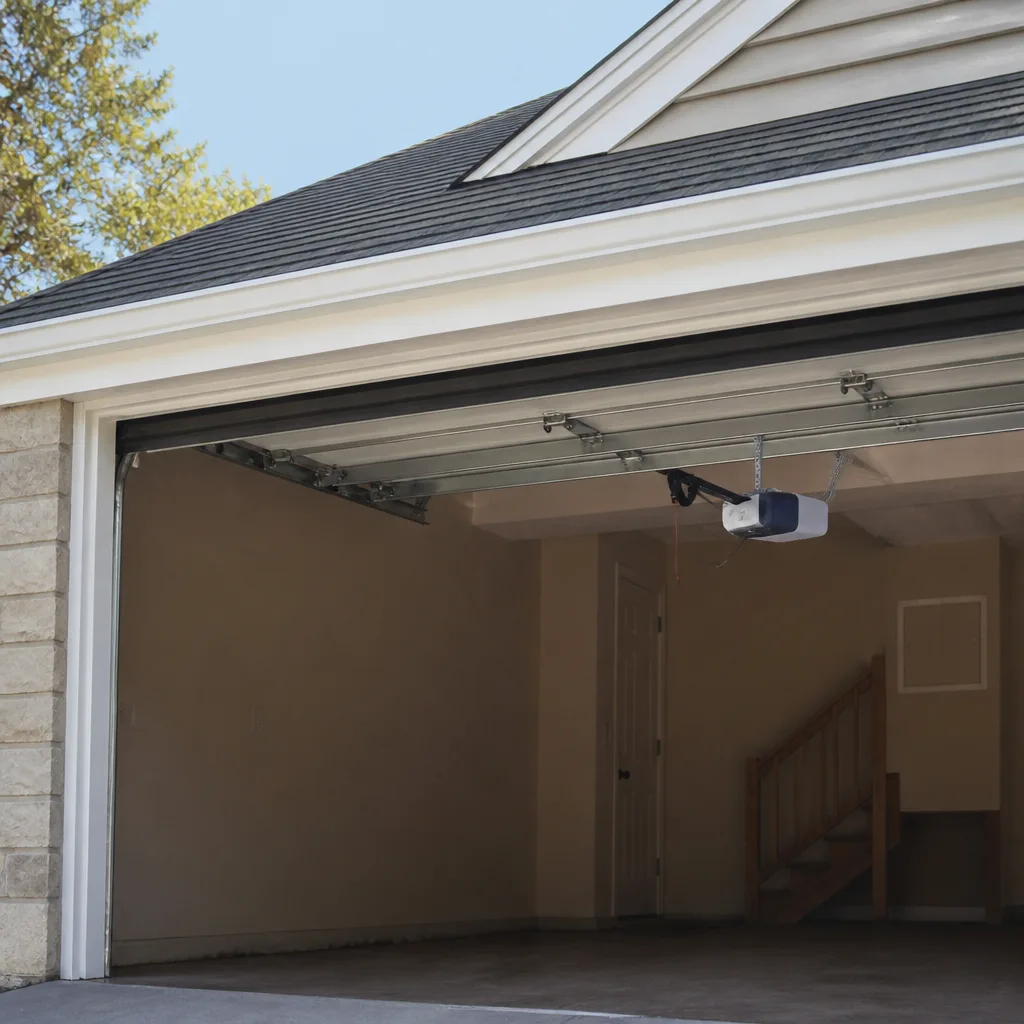 LiftMaster openers
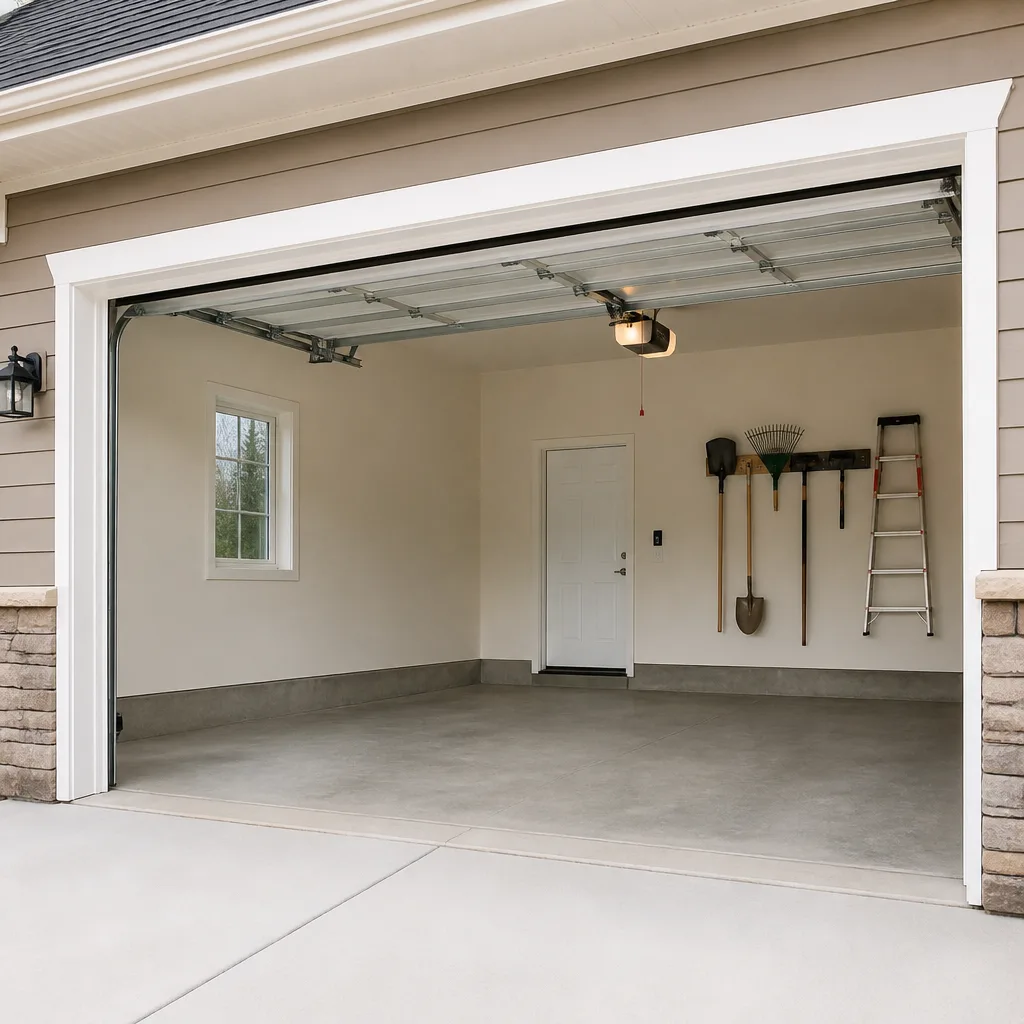 Chamberlain openers
Full 25-point door and opener safety check with every visit - springs, cables, rollers, tracks, and your LiftMaster or Chamberlain opener included
You get a price before we start. It does not change when the pro arrives.
Get your free estimateGarage Door Emergency Preparedness Guide for Knoxville Homes
Most garage door emergencies we hear about in Knoxville don’t start with a snapped spring. They start with a homeowner standing in a dark garage, holding a flashlight, pulling on a release cord that won’t budge because the door is under load. The spring was fine. The power was out. The car was trapped. What follows is a practical guide to the failures that actually strand Knoxville homeowners during ice storms and wind events, and the specific steps that get you unstuck. You’ll learn how to use your manual release correctly, why East Tennessee ice welds a door to its bottom seal, which backup battery openers fit the brands already on your wall, and what to do when a storm bends a track or leaves the door stuck halfway. None of it requires special tools. All of it requires knowing the procedure before you need it.
Quick Answer
A garage door stuck during a Knoxville power outage is almost always solved with the manual release cord, but only if you pull it correctly: the door must be fully closed or fully open, never partway, or the door can drop and the spring can recoil. If ice has frozen the door to the floor, break the seal from the outside with warm water along the bottom edge, never by forcing the opener. If a storm has bent a track or snapped a spring with the door mid-travel, stop and call a trained technician, because a door hung on a broken spring is a falling hazard.
Styles & brands we work with
- Raised-panel steel
- Carriage house
- Modern flush
- Full-view glass
- LiftMaster openers
- Chamberlain openers
Table of Contents
- How Do You Use the Manual Release When the Power Fails?
- Why Does Ice Freeze a Knoxville Garage Door to the Ground?
- Are Backup Battery Openers Worth It in Knoxville?
- What Do You Do When a Storm Warps a Track or Snaps a Spring?
- Pre-Storm Preparation Checklist for East Tennessee Weather
- How Are Wind Events Different From Ice Events?
- Garage Door Safety Rules Knoxville Homeowners Should Know
- After the Storm: How to Get Your Door Working Again
How Do You Use the Manual Release When the Power Fails?
The manual release cord disconnects the door from the opener so you can lift it by hand. It’s a small red handle, usually hanging from the trolley that rides the rail above the door. On most openers from LiftMaster, Chamberlain, Genie, and Raynor, the cord hangs roughly six feet off the floor and is easy to reach on a standard-height door. The trick is understanding what state the door is in before you pull.
Here’s the procedure, in order:
- Look at the door’s position first. Is it fully down, fully up, or partway?
- If the door is fully closed: pull the release cord straight down and away from the door. The trolley disconnects. Lift the door by hand from the bottom center, not the edges. It should feel heavy but manageable because the springs are still doing their job.
- If the door is fully open: the door is under spring tension holding it up. Pull the cord, then lower the door slowly by hand with a grip on the bottom section. Don’t let it drop. Openers hold the door; once disconnected, you are the opener.
- If the door is partway open: do not pull the cord. A door hanging partway is balanced on the springs and the opener together. Disconnecting one side while the other is still engaged can let the door fall, and if a cable is loose or a spring has already broken, the door can come down hard. Close the door with the opener if it still has power, or wait for a technician.
- Re-engage the door afterward. Once power returns, pull the release cord again (or run the opener) to reconnect the trolley. Test the door through a full cycle with the opener to make sure the travel limits are still set.
What trips people up is the partway case. In the dark, with rain blowing in, a door hung a few feet off the ground looks like the easiest one to handle. It’s the one to leave alone. If you can’t tell how far open the door is, use your phone light to see the bottom edge and the track. If it’s clearly between fully up and fully down, treat it as unsafe and call for help.
Why Does Ice Freeze a Knoxville Garage Door to the Ground?
Knoxville sits in a valley where cold air pools along the floor of the garage, and ice storms tend to arrive with freezing rain that runs down the door panel and puddles against the bottom seal. When that puddle refreezes overnight, the weatherstrip bonds to the concrete like a gasket. The next morning, the opener strains to lift a door that’s glued down, and either the opener strips a gear or the door rips the seal loose and leaves a gap under the door.
What matters here is that the door isn’t broken, it’s stuck, and the two problems need completely different treatment. Homeowners in neighborhoods like Sequoyah Hills and Fountain City sometimes assume the opener has failed when it’s really just fighting ice. The fix is mechanical and gentle:
- Break the seal from the outside first. Pour warm (not boiling) water along the outside bottom edge of the door, working from one end to the other. The goal is to thaw the bond between the weatherstrip and the concrete, not to melt the whole driveway.
- Never yank the opener into it. Running the opener against a frozen door is how you burn out the motor or snap a plastic gear. If the door won’t lift on the first try, stop the opener and thaw more.
- Don’t pry with a shovel or pry bar. The weatherstrip is the flexible seal at the bottom, and the bottom section of the door is a thin panel. Prying on either one can tear the seal or dent the panel, and a dented bottom panel is a repair, not a problem you can ignore.
- Clear snow and ice away from the tracks. Ice in the vertical track is a separate jam from the door sticking to the floor. Scrape it out with a plastic scraper. Never pour salt or de-icer directly into the track; it corrodes the rollers and the steel.
- Apply a silicone spray to the bottom seal before a predicted freeze. A dry seal with a coat of silicone releases from ice far more easily than a bare one.
If the door is iced and the opener has already strained against it, listen for a grinding sound from the motor before you try to run it again. A stripped gear won’t lift the door no matter how much ice you thaw, and that’s a job for a dedicated garage door opener repair technician.
Are Backup Battery Openers Worth It in Knoxville?
Backup battery openers keep the door working when the power goes out, and for Knoxville homeowners who have ever had to back a car out during an ice storm outage, they’re worth the money. The key is compatibility. Battery backup is built into the opener, not added later, so you’ll want a model that includes it at purchase or a replaceable battery pack if your existing opener has one.
What we’ve seen in Knoxville-area homes:
- LiftMaster makes battery-backup openers with a replaceable battery that lasts several years before it needs changing, and its MyQ connectivity lets you check door status from a phone during an outage.
- Chamberlain uses similar backup systems and is often found on the same homes, since the two brands share engineering. If your opener came with a battery, it’s likely one of these.
- Genie offers battery-backup models that work with its existing remotes and safety sensors, so an upgrade doesn’t require replacing every wall control and remote in the house.
- Raynor doors pair with a range of openers, including battery-capable ones, and are common on newer Knoxville construction.
If you’re not sure what you have, look at the opener housing above the door for the brand name and the model label on the side or back. That label tells us whether a backup battery can be added as a replacement or whether an opener replacement is the cleaner route. The honest answer is that on an opener old enough to be out of parts support, a backup battery isn’t worth retrofitting. On a newer opener that just lacks the feature, an upgrade kit is a small job. When we quote it, we give you a written estimate for both paths and you decide.
What Do You Do When a Storm Warps a Track or Snaps a Spring?
When a storm leaves the door stuck mid-travel and you hear or see a snapped spring or a bent track, the right move is to leave the door where it is and call a professional. This is the one garage door failure most likely to cause serious injury. A spring stores the energy needed to lift a door that can weigh over a hundred pounds, and when it fails, the remaining spring, the cables, and the door itself are all under load. A door hanging partway on a broken spring or a slacked cable can drop without warning.
Where the storm usually does damage:
- Vertical tracks get bent when wind pushes a door sideways or when a car bumps the bottom panel. A bent vertical track means the rollers bind and the door jams partway.
- Horizontal tracks and the door arm take the load when the door slams. High wind can make a door jump its track entirely.
- Torsion springs on the door’s header snap cleanly. Torsion means the shaft above the door. Extension springs run along the horizontal tracks. Both are dangerous to touch.
- Cables and drums are the parts that most often fail along with the spring, and a loose cable can whip.
What to do while you wait:
- Do not try to lift, close, or open the door.
- Keep family members, especially kids, out of the garage, and don’t let anyone stand under the door.
- If the door is stuck open or partway open and rain is coming in, park a car or car seats inside if you can do it safely, then leave the door alone.
- Note the brand on the opener and the door. When you call, that’s what we’ll ask for, and it’s how we arrive with the right parts for LiftMaster, Chamberlain, Genie, Raynor, or whichever system is on your wall.
- Call (855) 965-2742. We answer 24/7, and we’ll book a fast dispatch from 7am to 7pm, Sunday through Friday.
Pre-Storm Preparation Checklist for East Tennessee Weather
Knoxville’s storms come in two flavors: ice events that arrive with freezing rain and stay for days, and wind events that come with thunderstorms or the remnants of a Gulf system. Each one fails a garage door in a different way, and each needs a different list. Do these before the forecast turns, not after the power is already out.
Before a predicted ice event
- Spray silicone on the bottom weatherstrip and on the rubber pad where the door meets the floor.
- Clear the driveway of any standing water that tends to pool at the door sill.
- Test the manual release cord. Pull it once with the door fully closed, then re-engage it. This confirms the cord works and that the trolley reconnects.
- Check the safety sensors at the bottom corners of the track. If either LED is out or blinking, the opener won’t close the door, even when the power is on.
- Make sure the opener’s safety reverse works. Place a piece of 2×4 lumber flat on the floor under the door. Run the door down. It should reverse on contact.
- Have a flashlight and a pair of gloves in the garage, not the house. You’ll need them in the garage.
Before a predicted wind event
- Look at the vertical track on each side of the door. Any visible bend is a weakness that wind can finish off.
- Check the hinge screws and the bracket that holds the door to the opener arm. Loose screws work free in wind.
- Confirm the door is fully latched, if it has a manual latch, and that the bottom seal is intact. A missing seal lets wind under the door.
- Check the weatherstrip around the door frame for gaps. Gaps are where wind gets in and pushes the door.
- Clear loose objects from the garage floor that could bounce up into the tracks during a gust.
Before any storm
- Program the opener remotes and the wall control so you know they work.
- Charge the opener’s backup battery if it has one.
- Write down the brand and model of the opener and the door, and keep the number for a garage door service somewhere you can find it in the dark.
How Are Wind Events Different From Ice Events?
Ice events are slow and predictable; wind events are sudden and often cause the door to jump its track. Where ice glues the door to the floor, wind pushes it sideways in its frame, which means the failure modes don’t overlap. In an ice event, you usually have a working door that just won’t open. In a wind event, you may have a door that’s off its track, which is a stopped-in-place problem.
What a wind event typically does in Knoxville:
- Bends a vertical track. The door then binds partway up. This is the most common mid-travel jam after a storm.
- Pushes a roller out of the track. The door hangs at an angle on one side, and the opener keeps pushing against a door that can’t travel.
- Slams the door against the sill. This can crack the bottom panel or bend the door arm.
- Loosens the track brackets. A track that shifts a few degrees out of plumb will make the door stick on one side even after the wind passes.
If the door is off its track, don’t run the opener. Don’t lift the door. A door out of its track can swing free of the frame, and the weight of a door over a hundred pounds falling is a serious injury. Shut the circuit off at the opener (usually a plug or the wall switch) and call a technician. If you have a Raynor or Clopay door with a heavier panel, that weight is more to control, not less.
Garage Door Safety Rules Knoxville Homeowners Should Know
The dangerous parts of a garage door are the springs, the cables, and the door’s own weight. Springs and cables are under tension every day the door is used, and that tension is what lifts the door. Anything we tell you about springs should be about observing them, never adjusting them. The same is true of a torsion spring above the door or an extension spring along the track: both are parts a trained technician handles with specific tools, and both can cause serious injury in untrained hands.
The safety rules that follow from that:
- Never touch, adjust, or remove a spring or a cable. If you see a gap in the spring, a stretched stretch-out, or a loose cable, call for repair.
- Never put your fingers between the door panels while the door is moving.
- Keep kids and pets clear of the door path whenever the opener is running.
- Test the safety reverse monthly.
- Use the manual release only when the door is fully closed or fully open.
- Don’t force the door up if it binds. A bind is the door telling you something is out of alignment.
- If a technician from any company asks to adjust your springs without a written estimate first, that’s a reason to get a second opinion.
We can’t overstate this part: for garage door repair involving a spring or a cable, the call to a professional is the safe choice, not a convenience. Our technicians have up to 11 years of experience, and the ones trained on the brands in your garage know which torsion spring spec matches which door weight and which replacement parts are correct rather than close enough.
After the Storm: How to Get Your Door Working Again
Once the storm passes, the job is to find what actually failed before anything is run again. Skip the urge to just hit the remote and see what happens. If a track is bent, the opener will push a door that’s binding and either strip a gear or finish off the track. A slow walk around the door tells you most of what you need to know.
What to check, in order:
- Look at both vertical tracks for a bend. Sight up each one; a straight track looks like one line from floor to curve.
- Look at the horizontal tracks for anything knocked out of parallel.
- Check the bottom seal for tears or missing chunks from ice.
- Look at the springs from a distance. A broken torsion spring shows a visible gap.
- Check the cables for slack or anything twisted out of place.
- Run the opener once only if steps 1 through 5 are clear. If the door travels smoothly and reverses on a test object, you’re likely fine. If it stutters, binds, or reverses on its own, stop.
- Reset the travel limits if the opener was disconnected during the outage. The opener needs to know where the floor is; a door that closes short or won’t open flat is usually a limit setting, not a mechanical failure.
If the door needs a panel, a track, or a spring replaced, that’s where the brand matters. Different door makers have different track gauges, different panel profiles, and different spring specs. Working across Clopay, Amarr, Wayne Dalton, and Raynor means we can tell you whether a repair is the right call or whether the door is at an age where replacement is the honest answer. We don’t push a replacement when a repair makes sense. Knoxville has plenty of homes with well-built doors worth keeping.
Common Mistakes to Avoid
- Pulling the manual release with the door partway open. This is the single most dangerous mistake during a power outage. The door can drop or the spring can recoil, and it’s all avoidable if you check the door’s position first.
- Running the opener against a frozen door. Knoxville ice events bond the bottom seal to the concrete, and the opener will strip a gear or burn the motor trying to lift it. Break the seal with warm water before touching the opener.
- Prying on the bottom weatherstrip with a shovel. The seal and the bottom panel are thin. Prying damages both, and you’ll be looking at a bottom panel replacement instead of a thawed door.
- Pouring salt or de-icer into the track. Salt accelerates corrosion on the rollers and steel tracks. Use a plastic scraper on track ice, never a chemical de-icer.
- Buying a backup battery opener without checking compatibility. Backup batteries are built into openers, not added later. Confirm the model before buying, or you’ll have an opener you can’t attach to your existing remotes and sensors.
- Trying to fix a bent track yourself. A track bent out of alignment by wind needs the correct gauge and alignment. Prying it back into shape by hand usually leaves the door binding.
- Skipping the pre-storm test of the manual release. The cord works in fair weather and then jams in cold weather when the trolley is stiff. Test it before the ice arrives, not after.
See the difference
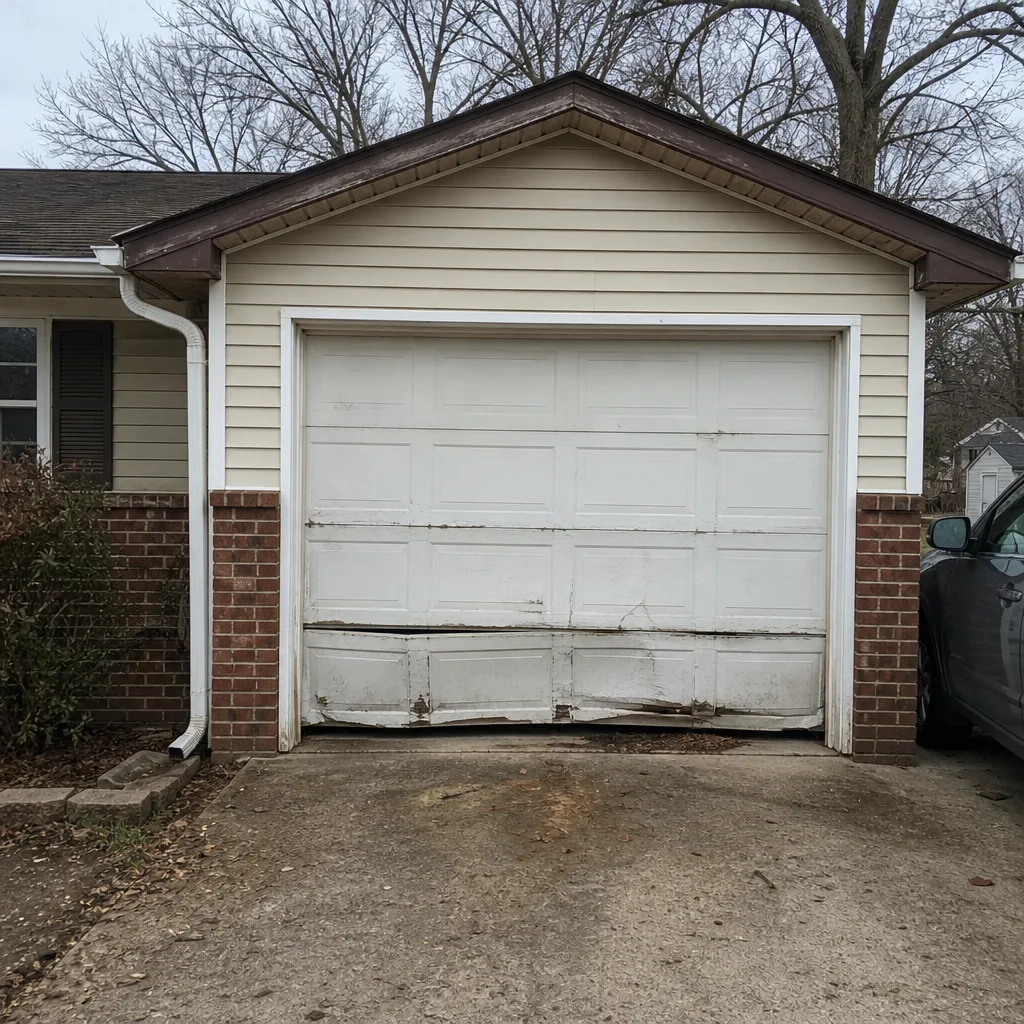 Before
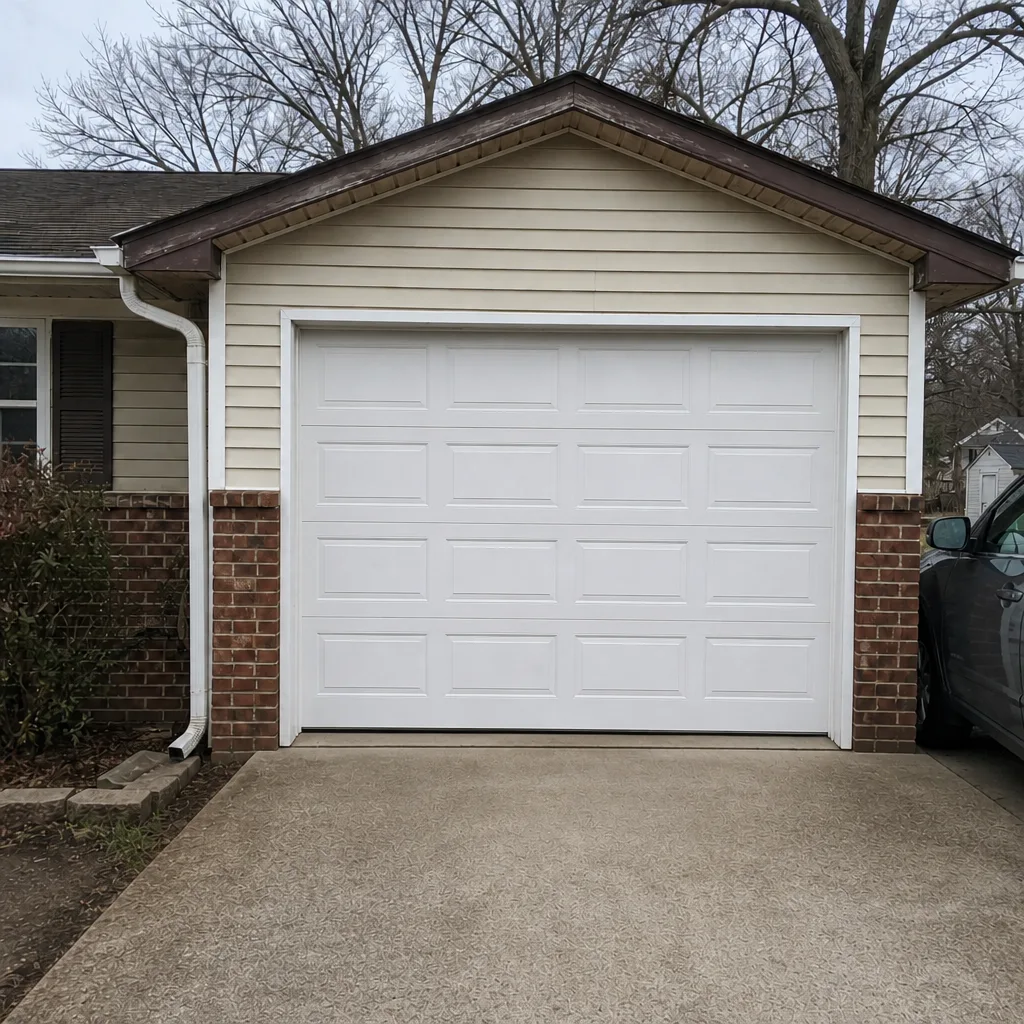 After
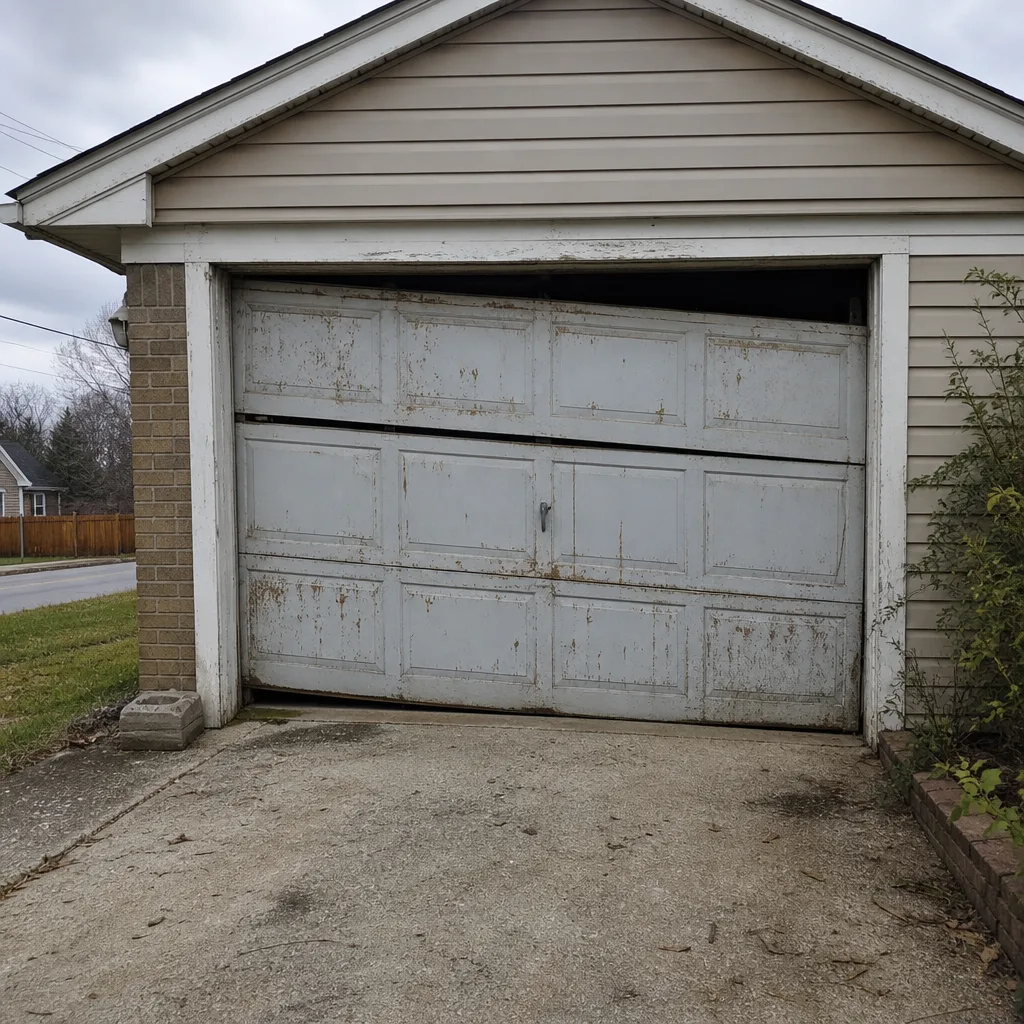 Before
 After
 Before
 After
When to Call a Professional
Call a trained technician if the door is stuck partway and you can see or hear a broken spring, a loose cable, or a bent track. Call if the opener strains against a frozen door after you’ve thawed it, if the door reverses on its own, or if the safety reverse test fails. Call if a storm has knocked a roller out of the track or shifted a bracket, and call if ice has torn the weatherstrip and left a gap under the door. Easton Garage Door Service offers free estimates in Knoxville – call (855) 965-2742. Our technicians work on the brands already in your garage, including LiftMaster, Chamberlain, Genie, and Raynor, and we quote a written estimate before any work starts. If you’d rather start with a full read on what we do, take a look at Easton Garage Door Service before you call, and we’ll walk through the door and the opener as one system so nothing falls between the two.
Frequently Asked Questions
Pull the manual release cord, but only if the door is fully closed or fully open. The red handle hangs from the trolley on the rail. Lift the door by hand from the bottom center, not the edges. If the door is partway open, call for help instead; pulling the cord at that point can let the door drop.
Freezing rain runs down the door panel and puddles against the bottom weatherstrip, and it refreezes overnight, bonding the seal to the concrete. Pour warm water along the outside bottom edge to thaw it, then try the door by hand before running the opener. Never pry at the seal with a shovel. If the door still won’t release, call (855) 965-2742; estimates are free.
Yes, if your opener is new enough to support one. Knoxville gets multi-day outages during ice events, and a backup battery keeps the door working when the power is out. Check the model label on your opener first: LiftMaster and Chamberlain openers often have replaceable battery packs, and Genie has battery-backup models that work with existing remotes. If the opener is old enough to be out of parts, a full replacement is the cleaner answer, so get a written estimate before deciding.
No. Springs and cables are under tension every day the door is used, and a door hung partway on a broken spring can fall without warning. Leave the door where it is, keep people out of the garage, and call a technician. For any repair involving a spring, a cable, or a track, this is a safety matter, not a convenience.
Spray silicone on the bottom seal, test the manual release cord with the door fully closed, confirm the safety sensors are working, and test the safety reverse with a piece of 2×4 flat on the floor. Keep a flashlight and gloves in the garage, not the house. Charge the backup battery if your opener has one, and write down the opener’s brand and model before the outage.
No. The written estimate sets the price, and you’ll have it before any work starts. Storm damage can look worse once the door is up and the track is inspected, but that’s why the estimate comes after the inspection and before the work, so there are no surprises on the invoice. Call (855) 965-2742 for a free estimate; we answer 24/7. Fast dispatch from 7am to 7pm, Sunday through Friday.
The Bottom Line
Garage door emergencies in Knoxville follow patterns you can prepare for. The manual release works only when the door is fully up or fully down, and that one rule prevents most of the dangerous cases we see. Ice bonds the bottom seal to the floor, so thaw it from the outside with warm water and never run the opener against a frozen door. Wind events bend tracks and throw rollers, and those are leave-it-alone problems. Keep a backup battery opener on your radar if your model supports one, run the pre-storm checklist before the forecast turns, and leave springs and cables to a technician. The door you rely on every day is worth knowing before the storm, not during it.
If your door is stuck, or you’d rather have a technician walk the system with you before the next ice event, call (855) 965-2742. We answer 24/7. Fast dispatch from 7am to 7pm, Sunday through Friday. Estimates are free, and the price is quoted and agreed before any work starts.
Written by the team at Easton Garage Door Service.