
Last updated November 15, 2026
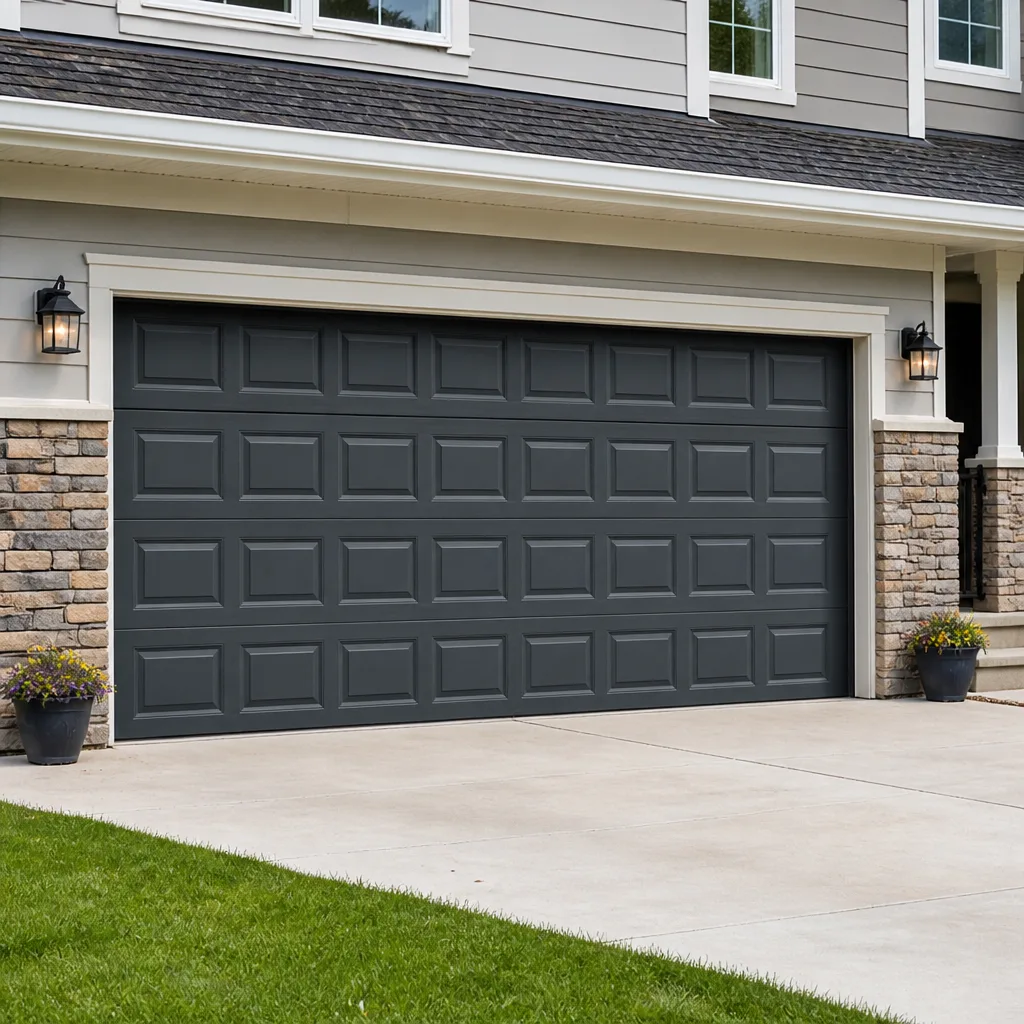 Raised-panel steel
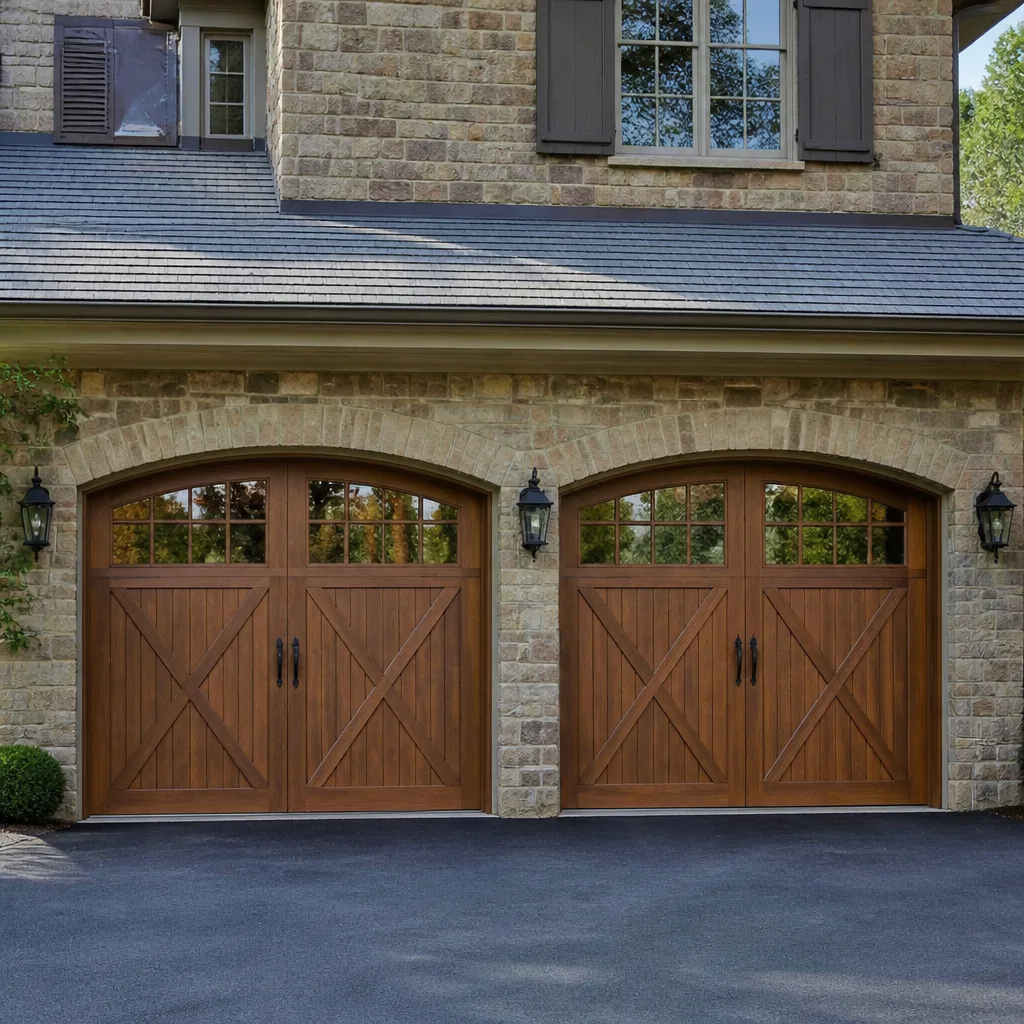 Carriage house
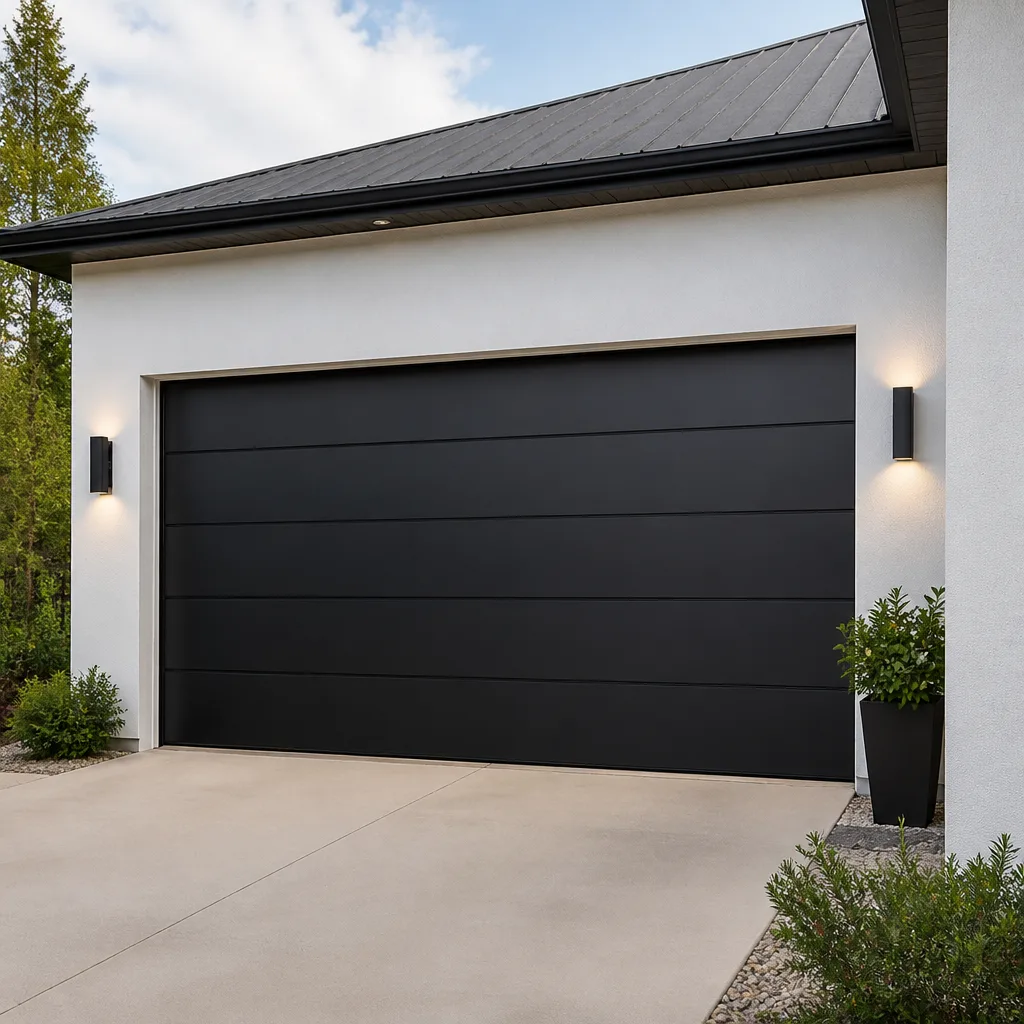 Modern flush
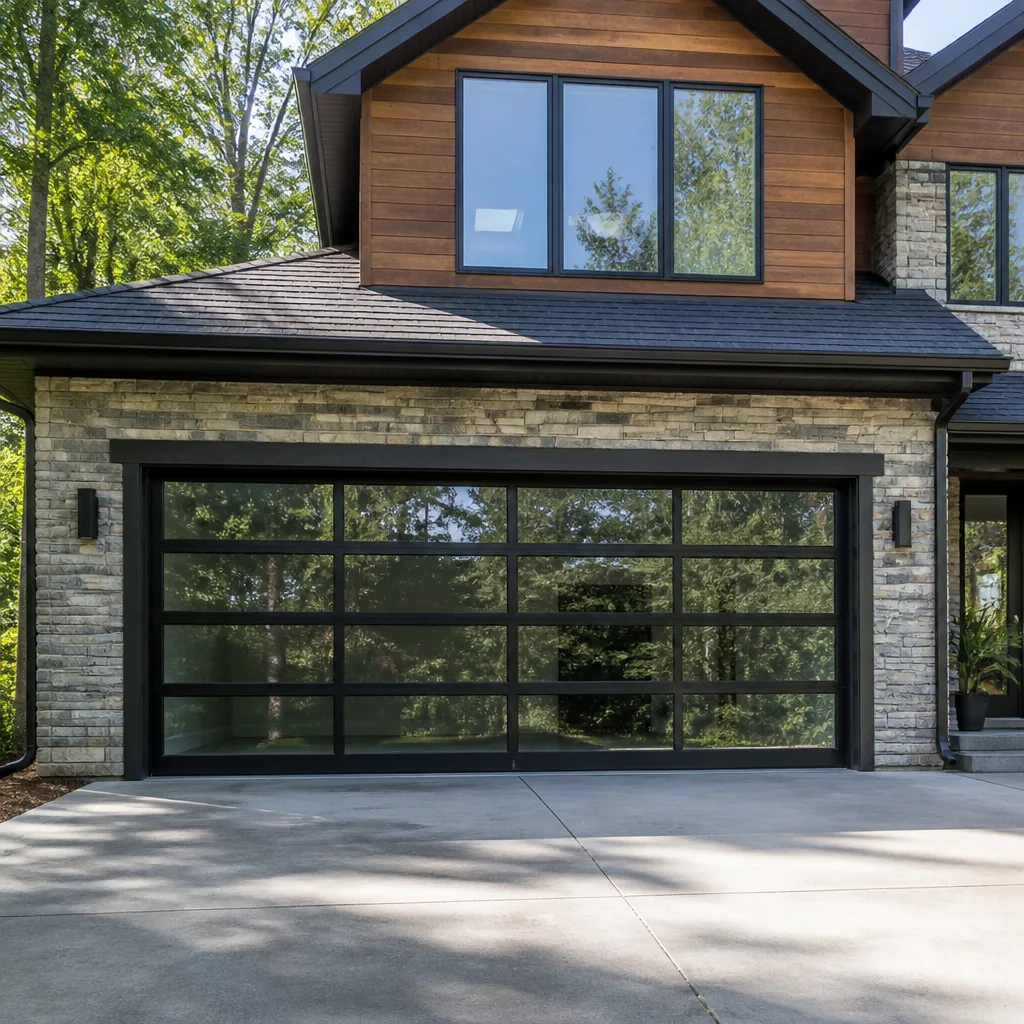 Full-view glass
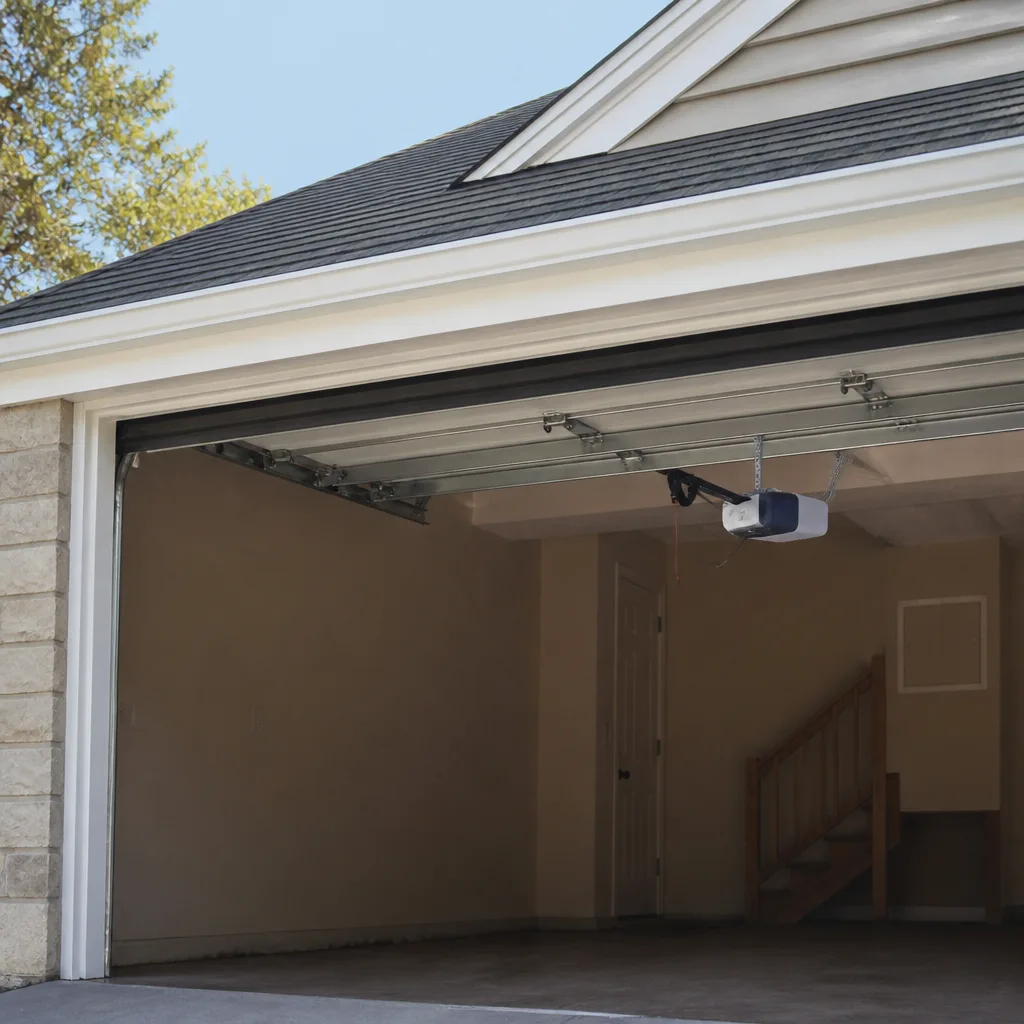 LiftMaster openers
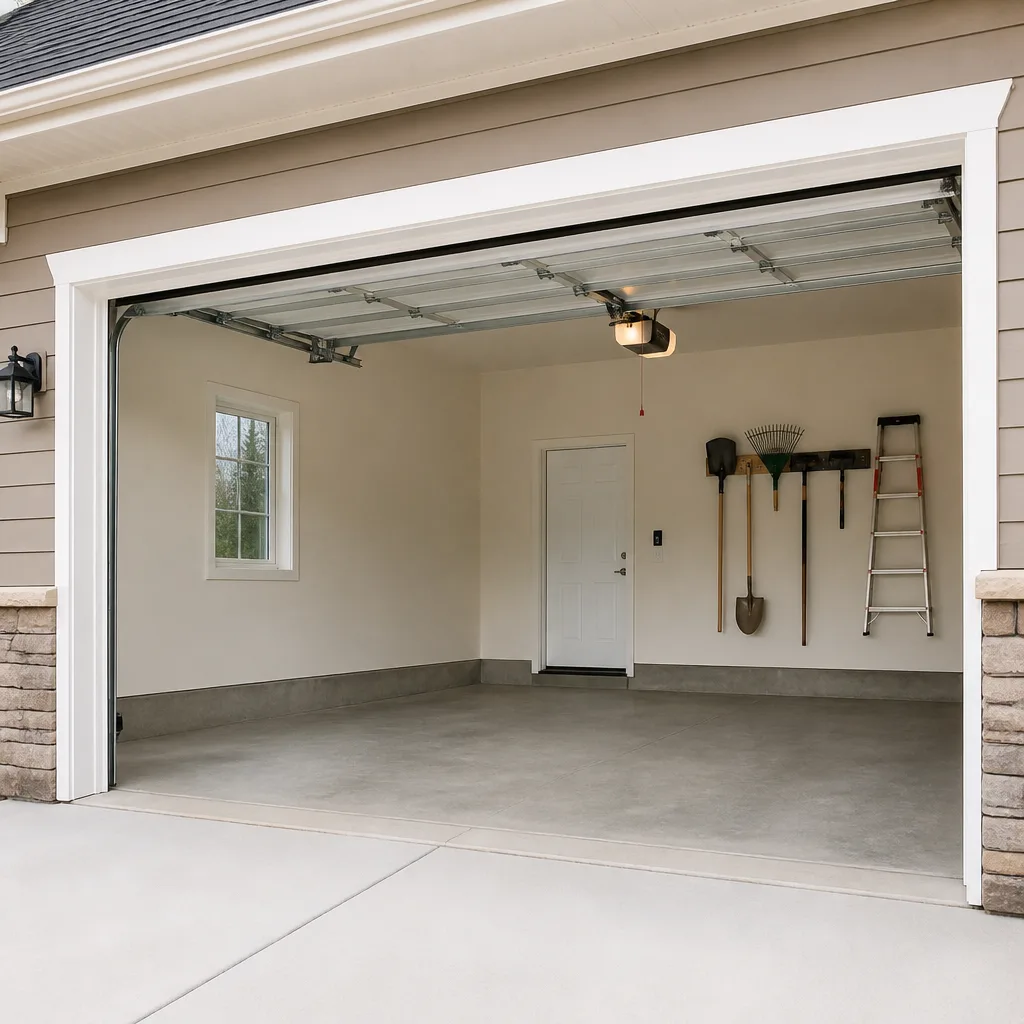 Chamberlain openers
Full 25-point door and opener safety check with every visit - springs, cables, rollers, tracks, and your LiftMaster or Chamberlain opener included
You get a price before we start. It does not change when the pro arrives.
Get your free estimateGarage Door Repair Troubleshooting in Knoxville: Common Problems and How to Fix Them
A garage door that reverses before it closes all the way usually isn’t broken. It’s telling you exactly what’s wrong through its safety sensor logic, and most homeowners skip that message and start turning bolts they shouldn’t touch. The same goes for the grinding that shows up every spring, or the door that suddenly feels heavier than it did last month. In this guide, we’ll show you how to read your door before you touch it, how to tell an opener problem from a mechanical one, and which fixes are genuinely safe for a homeowner to handle in Knoxville. You’ll also learn the hard line where self-repair gets dangerous and how to describe your problem clearly so a technician doesn’t spend a visit covering ground you’ve already walked.
Quick Answer
Most garage door problems in Knoxville fall into one of four buckets: opener logic faults (sensors, limits, remotes), mechanical wear (springs, cables, rollers, tracks), weather-driven misalignment from seasonal humidity, and simple lubrication or balance issues. Start by watching and listening to the door through a full open-and-close cycle without touching anything. If you hear a loud pop followed by a door that won’t lift, stop and call a technician. If the door moves smoothly but reverses, the problem is usually sensors or opener settings you can check safely yourself.
Styles & brands we work with
- Raised-panel steel
- Carriage house
- Modern flush
- Full-view glass
- LiftMaster openers
- Chamberlain openers
Table of Contents
- Read the Door First: Opener vs. Mechanical Problem
- What Each Sound Tells You
- Why Knoxville Humidity Causes Track and Sensor Drift
- Safe DIY Fixes vs. the Line You Don’t Cross
- The Balance Test: A Two-Minute Diagnostic
- Brand-Specific Behavior to Know Before You Call
- How to Describe the Problem Before You Call
- What Repair Typically Costs in Knoxville
Read the Door First: Opener vs. Mechanical Problem
The single most useful skill in garage door troubleshooting is separating the opener from the door itself. They’re two different systems bolted together, and they fail in very different ways. The opener is electromechanical: a motor, a logic board, a drive system, safety sensors, and a wall control or remote. The door is pure mechanics: panels, hinges, rollers, tracks, cables, and springs. When one fails, the other often gets blamed.
Before you touch anything, run this check on your garage door repair diagnosis:
- Pull the emergency release. With the door closed, pull the red handle to disconnect the opener from the door. You’ll now be moving the door by hand.
- Lift the door halfway. A properly balanced door should stay there with minimal effort and hold its position when you let go. If it drops or feels very heavy, the problem is mechanical (usually springs). If it’s light and holds, the door is fine and the opener is suspect.
- Watch the opener run alone. With the door disconnected, press the wall button. The carriage should travel smoothly along the rail. If it stutters, reverses, or stops short, the problem is in the opener, not the door.
- Reconnect and observe. Pull the release cord back toward the opener until it clicks. Run a full cycle and note exactly where it fails.
That four-step check takes about two minutes and tells you which half of your system needs attention. Without it, a technician arrives, runs the same check, and you’ve already spent the diagnostic time on something you could have handed them. In our experience across Knoxville homes, roughly half the calls we get labeled as “opener problems” turn out to be a door that’s simply out of balance or a roller that’s seized.
If the opener is the suspect, don’t skip the balance test above. A failing garage door opener repair is often just the symptom of a door that’s working the motor too hard. Fix the door, and the opener stops complaining.
What Each Sound Tells You
A garage door is a machine, and machines announce their problems. If you can learn to match the sound to the mechanism, you’ll walk outside knowing what kind of repair you’re facing before anyone opens a toolbox. Here’s what we listen for on a first visit:
- Grinding: Metal-on-metal friction. Usually dry or worn rollers, a dry torsion bar, or a bent track section forcing the rollers to scrape. Address it early, since grinding that continues for months wears the track itself.
- Popping: Often the torsion spring slipping on its shaft, a cable jumping a drum, or a hinge plate that’s come loose from its panel. A single loud pop followed by a door that won’t lift is the classic sign of a spring failure. Stop and call.
- Squealing: Friction at the rollers, hinges, or the opener’s drive screw. Usually the safest sound to address with lubrication, though persistent squealing on one hinge can indicate a hinge that’s coming loose or a bent roller stem.
- Rattling: Loose hardware. Bolts on hinges, brackets, and the opener’s rail can work loose over years of vibration. Rattling that starts suddenly after a storm often means a panel has shifted and pulled hardware with it.
- Clicking: Often the opener’s relay or logic board, or the safety sensors losing alignment momentarily. A door that clicks but doesn’t move needs an opener-focused diagnosis.
Track each sound to where it’s coming from. A grinding at the top of the door is different from a grinding at the bottom. A popping near the center (where the torsion spring is mounted) is different from a popping near the opener rail. Where the sound lives tells you which system it comes from, and by the time you call, you can tell a technician exactly what you heard and where.
Why Knoxville Humidity Causes Track and Sensor Drift
Knoxville weather moves. Spring rain arrives, summer humidity sits heavy for months, and fall swings between warm days and cool nights. That cycle affects a garage door in ways homeowners don’t expect. The steel in a track expands and contracts more than most people realize, and wooden framing around the door does the same. When the two move at different rates, the result is a track that’s no longer perfectly parallel to the door’s travel. Rollers start dragging, the door binds, and the opener compensates by pushing harder until something gives.
Sensor drift follows the same pattern. The photo-eye units at the base of the track are small, and their alignment depends on two screws holding a plastic bracket. Humidity swells the concrete at the floor, condensation forms on the lens, and spider webs build up faster during Knoxville’s wet months. Any of those can break the beam and cause a door that reverses before closing, or a door that won’t respond to the wall button at all.
Two checks to run each season:
- Wipe the sensor lenses and check alignment. Stand inside the garage with the door open. Each sensor should have a small indicator light on steady. If one is flickering or dark, wipe the lens, then adjust the bracket until both lights are steady and solid.
- Eye the track while the door moves. With the door running, watch the track from a few feet back. Any wobble, bend, or gap between the track and the door’s edge is a sign the track has drifted. A small adjustment on the bracket may resolve it; a significant bend is a technician job.
If the door has developed a rattle or bind specifically after a wet stretch, that’s the humidity working on the track, and it’s worth addressing before it becomes a roller or a cable problem. In our experience across Knoxville, homes on sloped lots and garages with south-facing doors tend to swing more dramatically with the seasons. Same house, same door, different behavior in July than in January.
Safe DIY Fixes vs. the Line You Don’t Cross
Some garage door issues are genuinely safe for a homeowner to handle. Others are among the most dangerous tasks in a house. Torsion springs, in particular, store enormous tension and can release it in an instant if handled without the right tools. We’d rather tell you clearly what’s safe and what isn’t than have you find out the hard way.
Safe to do yourself:
- Lubricating rollers, hinges, and the torsion bar with a garage-door-rated lubricant (not WD-40).
- Wiping and realigning photo-eye sensors.
- Adjusting the opener’s travel limit settings via the wall control or the opener’s manual, following the manufacturer’s instructions for your model.
- Replacing remote batteries and re-pairing remotes to the opener.
- Clearing debris from the track (never with your fingers near the moving parts).
- Tightening loose bolts on hinges and brackets with a socket wrench, with the door fully closed and the opener disconnected.
Not safe to do yourself:
- Replacing torsion springs or extension springs. These store enough energy to cause serious injury, and they require specific winding bars and technique. This is where self-repair becomes genuinely dangerous.
- Adjusting or replacing cables and drums. A cable under tension can whip and cut.
- Straightening a bent track that’s under load.
- Replacing hinges on a door whose springs are still under tension.
- Any work on the opener’s internal wiring or a hardwired circuit.
- Adjusting the opener’s force settings beyond the manufacturer’s recommended range. Overpowering a bind is how doors get damaged and people get hurt.
If you’re not sure which category your issue falls into, that’s a sign to call. A free estimate costs you nothing and takes far less time than a torn-up track or a spring that let go while you were adjusting it.
The Balance Test: A Two-Minute Diagnostic
The balance test is the single most useful thing a homeowner can do before calling for service. It tells you whether the door’s mechanical system is healthy, and it saves you money by ruling out half the possible causes. You’ll need nothing but two minutes and a bit of care.
- Close the door fully and disconnect the opener using the red emergency release handle.
- Lift the door about halfway to chest height, then let go.
- Watch what happens. A balanced door stays where you left it. A door that falls is spring-loaded too lightly (or the springs are failing). A door that rises on its own is spring-loaded too heavily.
- Lower it gently to the closed position and reconnect the opener by pulling the release cord toward the opener until it clicks.
If the door holds its position, your springs are doing their job and the problem is almost certainly in the opener, the sensors, or a roller. If the door falls or rises, the springs need attention, and that’s a call we’d make right away. A door that’s out of balance is being fought by the opener on every single cycle, and openers that fight back tend to fail faster than openers with a healthy door.
Run this test every few months. It’s the cheapest diagnostic you have, and the same check a technician runs on arrival. If you’ve already run it and can describe the result, you’ve saved your visit time before anyone arrives.
Brand-Specific Behavior to Know Before You Call
Not all garage door openers behave the same way, and the brand on your opener or door changes what you should expect from a repair. We work across LiftMaster, Chamberlain, Genie, Clopay, Amarr, Wayne Dalton, Craftsman, and Raynor because most homes in Knoxville already have one of those systems installed, and knowing the brand’s quirks saves time on diagnosis.
A few behavior patterns worth knowing:
- LiftMaster and Chamberlain (which share a parent) use similar logic boards and safety sensor wiring. A common issue is a wall control that keeps beeping with a fault code after a power surge or storm. The code itself is often the most useful diagnostic the system can give you, and if you can read it off before calling, you’ve already cut the diagnostic time.
- Craftsman openers, often original equipment in older Knoxville homes, frequently use a drive screw rather than a belt or chain. Squealing on a Craftsman usually means the drive screw needs lubrication, and it’s one of the few fixes we recommend a homeowner handle themselves.
- Clopay, Amarr, and Wayne Dalton doors each have specific panel and hinge designs. When a panel is damaged, matching the replacement panel to the original door’s exact profile matters, and a mismatched panel is one of the most common reasons a repair doesn’t look right afterward.
- Raynor doors often use a torsion spring system with a specific winding pattern. If you’re calling about a spring that’s failed, tell the technician the brand on the door so they can come prepared.
The practical point is that your brand tells a trained eye a lot. A Genie opener with a specific fault pattern, a Craftsmans screw-drive squawk, a LiftMaster sensor fault code: these are all useful clues. Tell the technician the brand on both the door and the opener when you call. It’s one of the fastest ways to get the right parts and expertise on the first visit.
We don’t push a particular brand. We Easton Garage Door Service work with what you already have, and we recommend repair when repair is the right call rather than a full replacement because the door doesn’t match our preferred product line.
How to Describe the Problem Before You Call
The most common reason a diagnostic visit runs long is that the homeowner didn’t yet know what to say. With a few basic notes, you can hand a technician the full picture in one sentence and get straight to the repair. Before you call, work through these questions:
- When did it start? After a storm, after a power outage, after a cold snap, gradually over weeks, or suddenly.
- Does it happen every cycle or intermittently? Intermittent problems often point to sensor alignment, loose wiring, or a logic board that’s beginning to fail.
- Where exactly does it fail? At the start of the open, at the start of the close, partway through, or against the floor.
- What do you hear, and where does the sound come from? Top, bottom, middle, or the opener rail.
- What’s the brand on the door and the opener? If you can find the model number sticker on the opener’s housing, include it.
- What did the balance test show? Held its position, fell, or rose.
- Are any lights on the safety sensors, and are they steady?
- Has anyone touched it already? Any DIY attempt, even a small one, should be disclosed. Adjustments made by an untrained hand are one of the most common reasons a simple fix becomes a larger job.
Write those answers on a note or in your phone before calling. A technician who hears “the door reverses about a foot before the floor, no sound, both sensor lights are steady, opener is a LiftMaster, and it started after last week’s storm” is walking in with a working hypothesis. One who hears “it doesn’t work” is starting from zero. The difference is time and money in your pocket.
If you’ve never worked with a garage door company before, the questions above also help you evaluate the technician’s response. If they ask you to run through the same list before scheduling, that’s a good sign. If they show up expecting to figure everything out on site, you’re paying for that discovery time.
What Repair Typically Costs in Knoxville
Repair costs in Knoxville vary by the part, the door, and the brand. The table below shows typical ranges for the most common repairs. The written estimate you receive sets the final price, and the price is quoted and agreed before any work starts. These are estimates, not quotes for your specific door.
- Safety sensor realignment or replacement: $100 – $200
- Roller replacement (per roller, in sets): $8 – $15 each, typically replaced as a set
- Hinge replacement (per hinge): $10 – $25 each
- Cable replacement (per cable): $75 – $150
- Torsion spring replacement (per spring): $180 – $340 per spring, most doors need a matched pair replaced together (roughly double)
- Opener logic board replacement: $150 – $300 depending on brand
- Opener drive gear or drive screw repair: $120 – $250
- Track straightening or replacement (per section): $100 – $250
- Panel replacement (per panel): $200 – $600 depending on door brand and profile
- Full opener replacement (unit and install): $350 – $700 depending on drive type and features
The biggest pricing surprises come from diagnosing the wrong system first. If your problem is a failing spring and the technician was called for an “opener repair,” you’ve paid for a diagnostic focused on the wrong component. Following the read-the-door-first steps above keeps you on the shortest path to the right repair.
For an exact quote on your door, call (855) 965-2742. Estimates are free, and the price is set per job by the written estimate so there’s nothing added after the work is done. We answer 24/7 and offer fast dispatch from 7am to 7pm, Sunday through Friday.
Common Mistakes to Avoid
- Adjusting the force settings before running the balance test. Increasing the opener’s force overcomes a bind temporarily but accelerates wear on the motor, gear, and door. Fix the underlying bind first, then leave the force setting alone.
- Using WD-40 on the rollers or track. It attracts dust and gums up the mechanism. Use a garage-door-rated white lithium or silicone lubricant instead. This matters more in Knoxville because summer humidity turns the wrong lubricant into a sticky paste by July.
- Bending the track with a hammer or pliers. Track steel is thin and work-hardens when you bend it, which makes it brittle. A visible kink after a DIY attempt usually means replacement, not a repair, and the bill goes up.
- Replacing one spring when the pair is the same age. Torsion springs on most doors are installed in matched pairs for balance. Replacing one leaves the other to fail soon, and a partially-new pair is one of the most common reasons a door doesn’t roll smoothly after a repair.
- Assuming a sensor fault is the sensor’s fault. A door that reverses on the way down often has a sensor that’s aimed slightly off, not broken. Wipe the lenses, check both indicator lights, then call if they’re steady and the door still reverses.
- Ignoring a rattle that started after a storm. Rattles after a wind event often mean a panel has shifted or a hinge has pulled loose. Left alone, a shifted panel can pull its neighbors and turn a single-panel fix into a multi-panel repair.
- Calling without knowing the brand or the symptoms. A technician who arrives with no information starts with the same diagnostic you could have done in two minutes. The fewer unknowns on arrival, the faster the repair.
See the difference
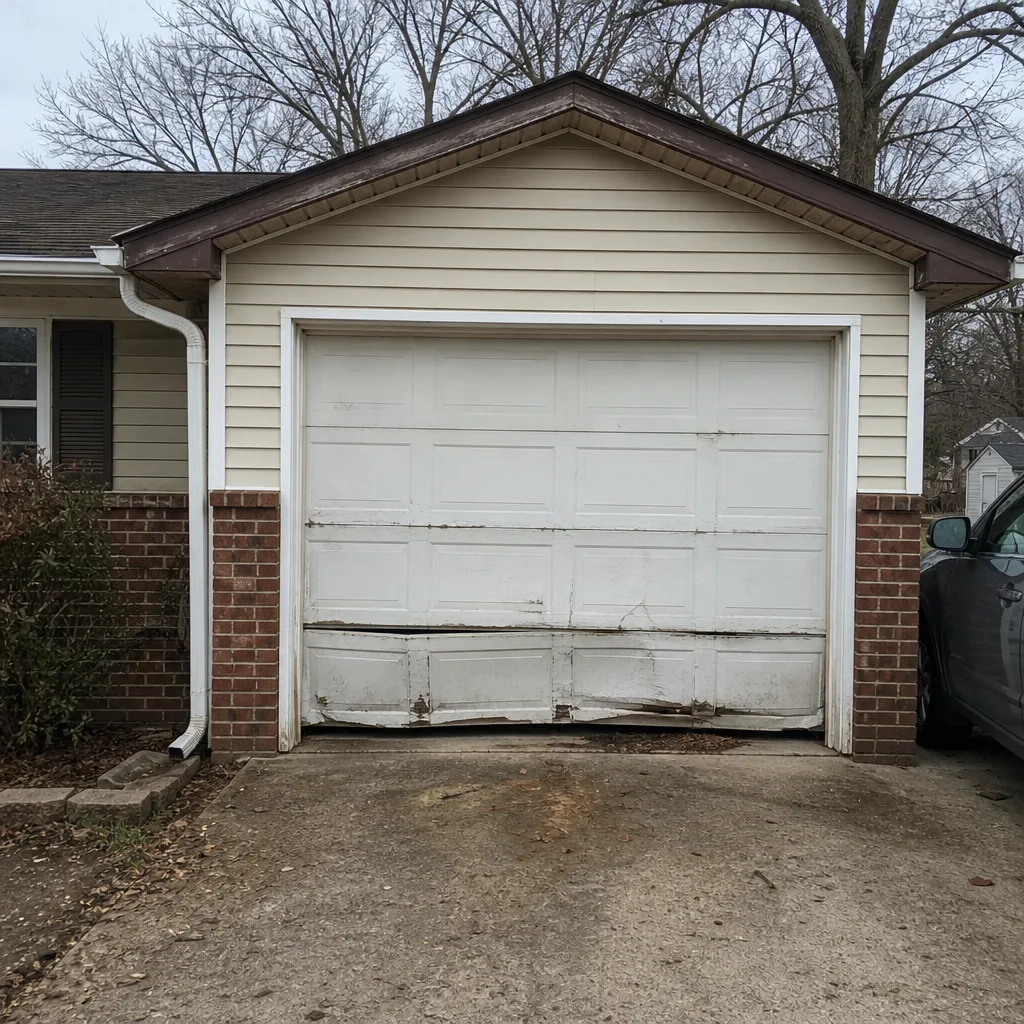 Before
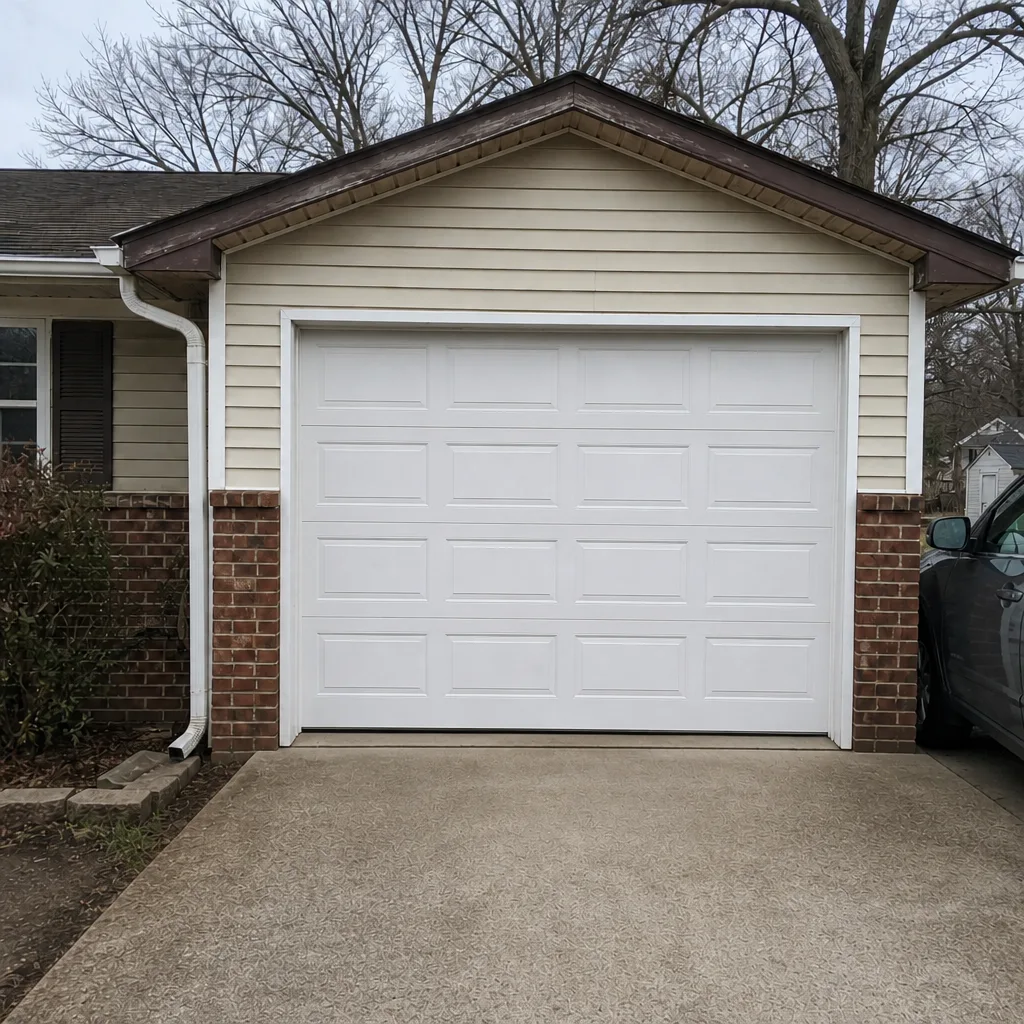 After
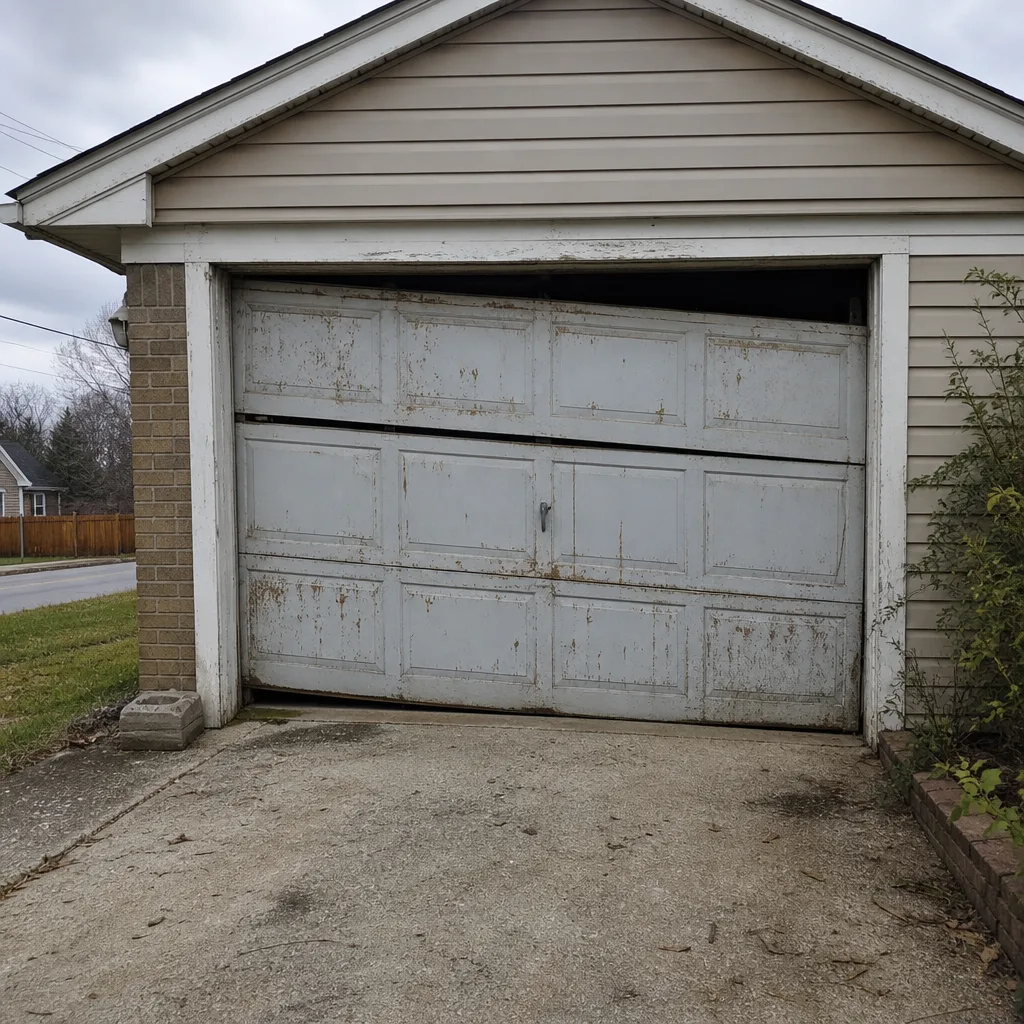 Before
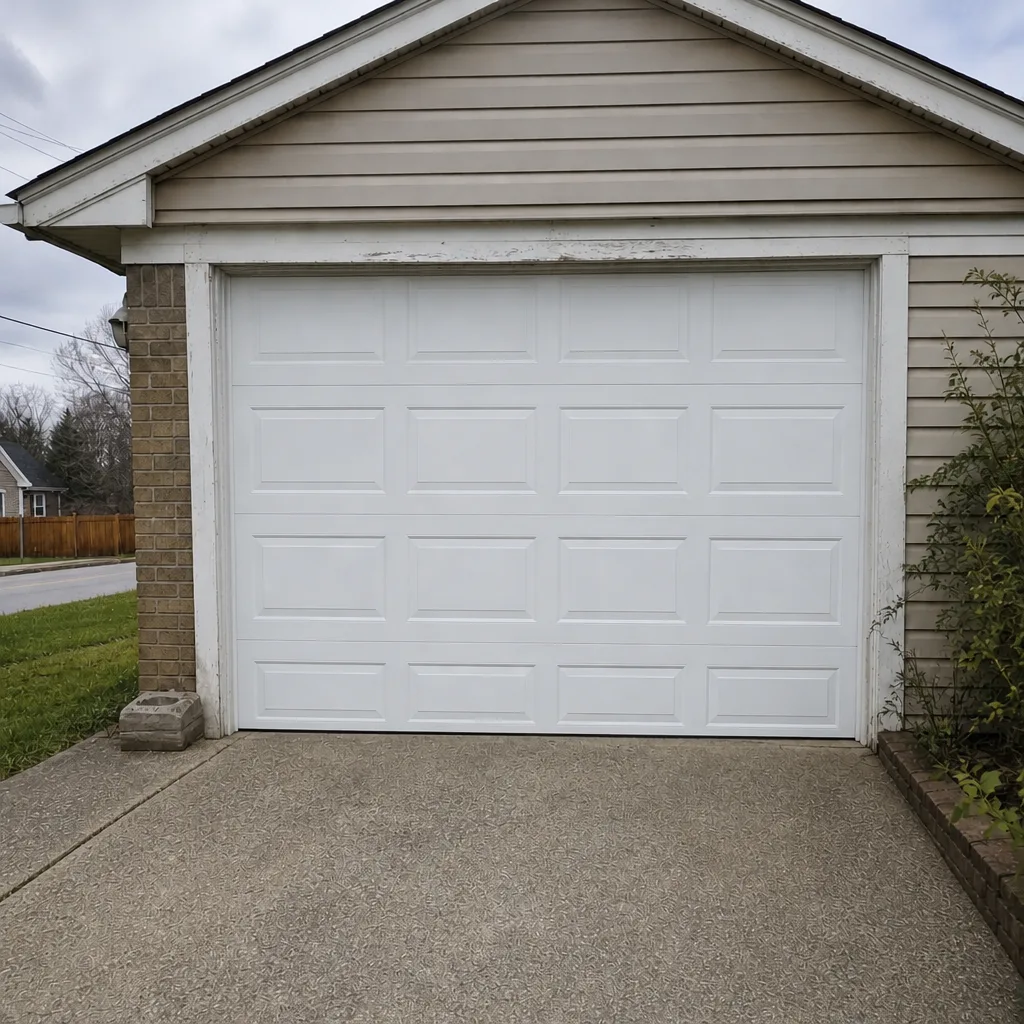 After
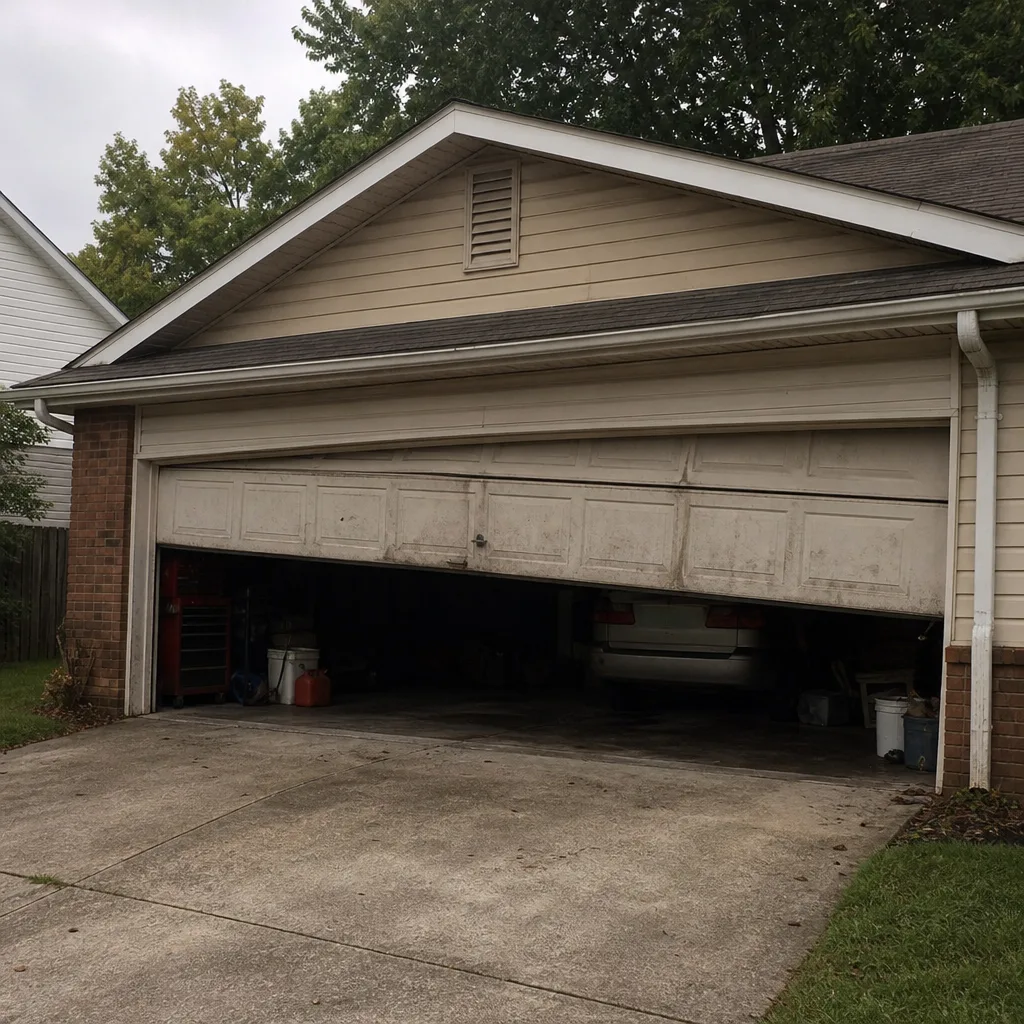 Before
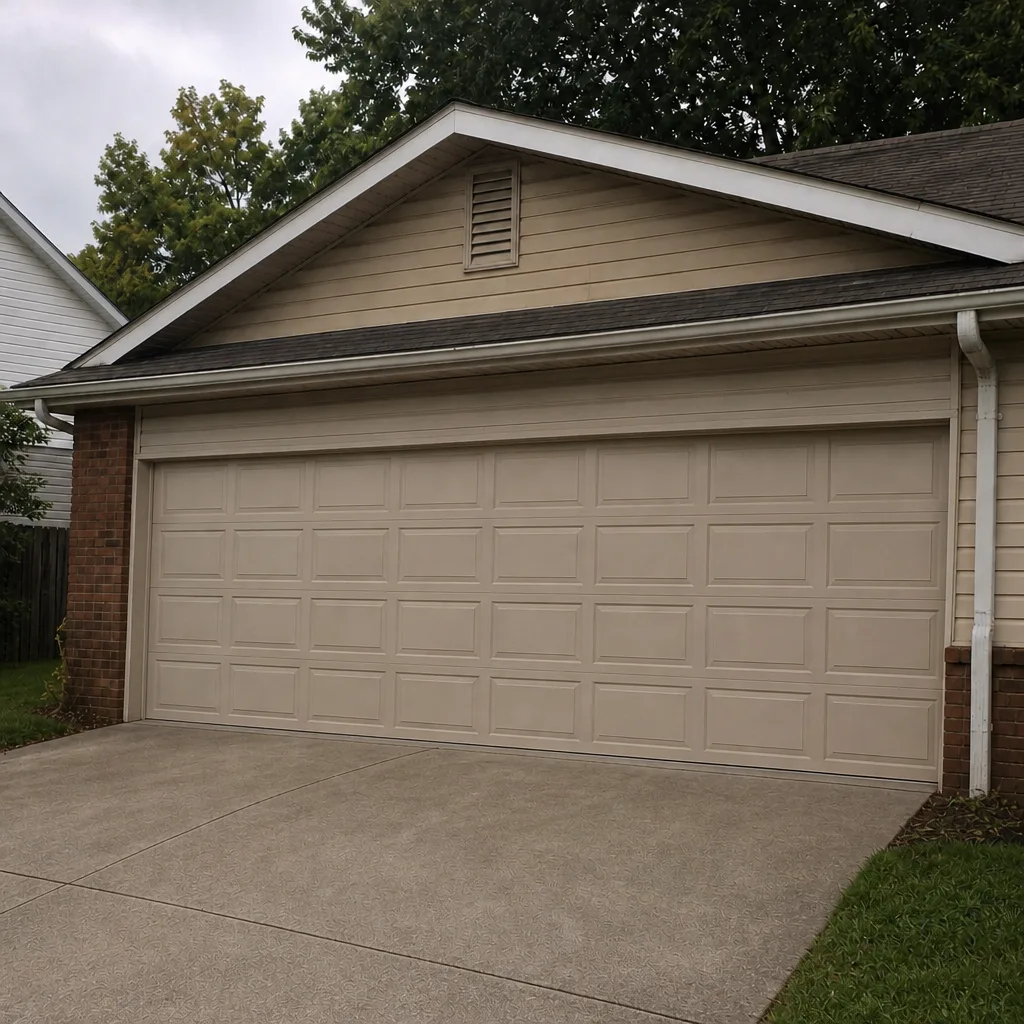 After
When to Call a Professional
Call a technician immediately when a torsion spring has broken (a single loud pop followed by a door that won’t lift), a cable has come off a drum, the door has come off one track, or the opener won’t respond to the wall button at all. Call promptly when the door has developed a bind you can feel, a grinding that continues for more than a few cycles, or a rattle that started after a storm. Also call when the balance test fails (the door falls or rises on its own), or when a LiftMaster, Chamberlain, Genie, or Craftsman opener shows a fault code you can’t interpret. Easton Garage Door Service offers free estimates in Knoxville, and our technicians have up to 11 years of experience across all eight major brands. Call (855) 965-2742 for an assessment.
Frequently Asked Questions
Typical ranges run from about $100 – $200 for sensor work up to $200 – $600 per panel when a panel needs replacing, with spring replacement around $180 – $340 per spring (most doors need a matched pair, so roughly double). Every job is quoted per job by the written estimate, agreed before any work starts, so the range you’re given is the price you can plan on. Call (855) 965-2742 for an exact quote. Estimates are free.
For many repair calls, yes. We offer fast dispatch from 7am to 7pm, Sunday through Friday, and same-day repair is a regular part of the day. We’re closed Saturday, so a call that comes in on Saturday is booked into the next opening, Sunday through Friday. Call (855) 965-2742. We answer 24/7.
No. The written estimate is the price, quoted and agreed before any work starts. If we open up the opener housing or step back and find something the estimate didn’t cover, we come back to you with the additional scope before doing the work. What you agree to is what you’re invoiced. Call (855) 965-2742 for a free estimate.
Yes. Our technicians are experienced and trained across all eight major brands (LiftMaster, Chamberlain, Genie, Clopay, Amarr, Wayne Dalton, Craftsman, and Raynor), and the work is performed by licensed and insured professionals. We can work with your insurer if a claim is involved. Call (855) 965-2742 for details on your specific project.
The safety sensors are the first thing to check. Wipe both lenses and verify the indicator lights are steady. If they’re steady and the door still reverses, it’s either a limit setting, a logic board fault, or a bind the door feels and the opener interprets as an obstruction. Run the balance test first. If the door falls or rises, the springs are the problem, not the sensors. Call (855) 965-2742 if the door keeps reversing after the sensor check.
No. Torsion springs store enormous tension, and releasing that tension without the right tools can cause serious injury. This is the hard line where self-repair becomes dangerous. Spring replacement is a trained-professional job. We replace both springs on a matched pair as one job because they’re installed together for balance. Call (855) 965-2742 for a free estimate on a spring repair.
The Bottom Line
Garage door troubleshooting in Knoxville starts with reading the door before you touch it. The balance test, the sound map, and the sensor check tell you which system is failing, and that knowledge saves you time and money whether you fix it yourself or call. Safe DIY covers lubrication, sensor alignment, limit adjustments, and remote pairing. Unsafe DIY covers any work on springs, cables, or tracks under tension, and that’s not worth the risk. When your door needs a real diagnosis, Easton Garage Door Service brings up to 11 years of technician experience across LiftMaster, Chamberlain, Genie, Clopay, Amarr, Wayne Dalton, Craftsman, and Raynor. Call (855) 965-2742 for a free estimate. We answer 24/7, with fast dispatch from 7am to 7pm, Sunday through Friday. The door you depend on every day deserves a specialist, not a generalist.
Written by the team at Easton Garage Door Service.